question_answer 1)
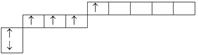
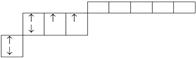
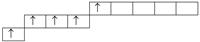
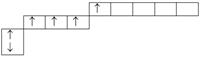
Be's 4th electron will have four quantum numbers [MNR 1985]
A)
done
clear
B)
done
clear
C)
done
clear
D)
done
clear
View Solution play_arrow
question_answer 2)
The quantum number which specifies the location of an electron as well as energy is [DPMT 1983]
A)
done
clear
B)
done
clear
C)
done
clear
D)
done
clear
View Solution play_arrow
question_answer 3)
The shape of an orbital is given by the quantum number [NCERT 1984; MP PMT 1996]
A)
done
clear
B)
done
clear
C)
done
clear
D)
done
clear
View Solution play_arrow
question_answer 4)
In a given atom no two electrons can have the same values for all the four quantum numbers. This is called [BHU 1979; AMU 1983; EAMCET 1980, 83; MADT Bihar 1980; CPMT 1986, 90, 92; NCERT 1978, 84; RPMT 1997; CBSE PMT 1991; MP PET 1986, 99]
A)
done
clear
B)
done
clear
C)
done
clear
D)
done
clear
View Solution play_arrow
question_answer 5)
Nitrogen has the electronic configuration \[1{{s}^{2}},2{{s}^{2}}2p_{x}^{1}2p_{y}^{1}2p_{z}^{1}\] and not \[1{{s}^{2}},2{{s}^{2}}2p_{x}^{2}2p_{y}^{1}2p_{z}^{0}\] which is determined by [DPMT 1982, 83, 89; MP PMT/PET 1988; EAMCET 1988]
A)
done
clear
B)
done
clear
C)
done
clear
D)
done
clear
View Solution play_arrow
question_answer 6)
Which one of the following configuration represents a noble gas [CPMT 1983, 89, 93; NCERT 1973; MP PMT 1989; DPMT 1984]
A)
done
clear
B)
done
clear
C)
done
clear
D)
done
clear
View Solution play_arrow
question_answer 7)
The electronic configuration of silver atom in ground state is [CPMT 1984, 93]
A)
done
clear
B)
done
clear
C)
done
clear
D)
done
clear
View Solution play_arrow
question_answer 8)
Principal, azimuthal and magnetic quantum numbers are respectively related to [CPMT 1988; AIIMS 1999]
A)
done
clear
B)
done
clear
C)
done
clear
D)
done
clear
View Solution play_arrow
question_answer 9)
Correct set of four quantum numbers for valence electron of rubidium (Z = 37) is [IIT 1984; JIPMER 1999; UPSEAT 2003]
A)
done
clear
B)
done
clear
C)
done
clear
D)
done
clear
View Solution play_arrow
question_answer 10)
The correct ground state electronic configuration of chromium atom is [IIT 1989, 94; MP PMT 1993; EAMCET 1997; ISM Dhanbad 1994; AFMC 1997; Bihar MEE 1996; MP PET 1995, 97; CPMT 1999; Kerala PMT 2003]
A)
done
clear
B)
done
clear
C)
done
clear
D)
done
clear
View Solution play_arrow
question_answer 11)
2p orbitals have [NCERT 1981; MP PMT 1993, 97]
A)
done
clear
B)
done
clear
C)
done
clear
D)
done
clear
View Solution play_arrow
question_answer 12)
Electronic configuration of \[{{H}^{-}}\] is [CPMT 1985]
A)
done
clear
B)
done
clear
C)
done
clear
D)
done
clear
View Solution play_arrow
question_answer 13)
The quantum numbers for the outermost electron of an element are given below as \[n=2,\,l=0,\,m=0,\,s=+\frac{1}{2}\]. The atoms is [EAMCET 1978]
A)
done
clear
B)
done
clear
C)
done
clear
D)
done
clear
View Solution play_arrow
question_answer 14)
Principal quantum number of an atom represents [EAMCET 1979; IIT 1983; MNR 1990;UPSEAT 2000, 02]
A)
done
clear
B)
done
clear
C)
done
clear
D)
done
clear
View Solution play_arrow
question_answer 15)
An element has the electronic configuration \[1{{s}^{2}},2{{s}^{2}}2{{p}^{6}},3{{s}^{2}}3{{p}^{2}}\]. Its valency electrons are [NCERT 1973]
A)
done
clear
B)
done
clear
C)
done
clear
D)
done
clear
View Solution play_arrow
question_answer 16)
The magnetic quantum number specifies [MNR 1986; BHU 1982; CPMT 1989, 94; MP PET 1999; AFMC 1999; AMU (Engg.) 1999]
A)
done
clear
B)
done
clear
C)
done
clear
D)
done
clear
View Solution play_arrow
question_answer 17)
Which of the following sets of quantum numbers represent an impossible arrangement [IIT 1986; MP PET 1995]
A)
done
clear
B)
done
clear
C)
done
clear
D)
done
clear
View Solution play_arrow
question_answer 18)
If \[n=3\], then the value of \['l'\] which is incorrect [CPMT 1994]
A)
done
clear
B)
done
clear
C)
done
clear
D)
done
clear
View Solution play_arrow
question_answer 19)
Which orbital is dumb-bell shaped [MP PMT 1986; MP PET/PMT 1998]
A)
done
clear
B)
done
clear
C)
done
clear
D)
done
clear
View Solution play_arrow
question_answer 20)
The total number of unpaired electrons in \[d\]- orbitals of atoms of element of atomic number 29 is [CPMT 1983]
A)
done
clear
B)
done
clear
C)
done
clear
D)
done
clear
View Solution play_arrow
question_answer 21)
The shape of \[2p\]orbital is [CPMT 1983; NCERT 1979]
A)
done
clear
B)
done
clear
C)
done
clear
D)
done
clear
View Solution play_arrow
question_answer 22)
The magnetic quantum number for an electron when the value of principal quantum number is 2 can have [CPMT 1984]
A)
done
clear
B)
done
clear
C)
done
clear
D)
done
clear
View Solution play_arrow
question_answer 23)
Which one is the correct outer configuration of chromium [AIIMS 1980, 91; BHU 1995]
A)
B)
C)
D)
View Solution play_arrow
question_answer 24)
The following has zero valency [DPMT 1991]
A)
done
clear
B)
done
clear
C)
done
clear
D)
done
clear
View Solution play_arrow
question_answer 25)
The number of electrons in the valence shell of calcium is [IIT 1975]
A)
done
clear
B)
done
clear
C)
done
clear
D)
done
clear
View Solution play_arrow
question_answer 26)
The valence electron in the carbon atom are [MNR 1982]
A)
done
clear
B)
done
clear
C)
done
clear
D)
done
clear
View Solution play_arrow
question_answer 27)
For the dumb-bell shaped orbital, the value of \[l\] is [CPMT 1987, 2003]
A)
done
clear
B)
done
clear
C)
done
clear
D)
done
clear
View Solution play_arrow
question_answer 28)
Chromium has the electronic configuration \[4{{s}^{1}}3{{d}^{5}}\] rather than \[4{{s}^{2}}3{{d}^{4}}\] because
A)
done
clear
B)
done
clear
C)
done
clear
D)
done
clear
View Solution play_arrow
question_answer 29)
The electronic configuration of calcium ion \[(C{{a}^{2+}})\] is [CMC Vellore 1991]
A)
done
clear
B)
done
clear
C)
done
clear
D)
done
clear
E)
done
clear
View Solution play_arrow
question_answer 30)
The structure of external most shell of inert gases is [JIPMER 1991]
A)
done
clear
B)
done
clear
C)
done
clear
D)
done
clear
View Solution play_arrow
question_answer 31)
The two electrons in K sub-shell will differ in [MNR 1988; UPSEAT 1999, 2000; Kerala PMT 2003]
A)
done
clear
B)
done
clear
C)
done
clear
D)
done
clear
View Solution play_arrow
question_answer 32)
A completely filled \[d\]-orbital \[({{d}^{10}})\] [MNR 1987]
A)
done
clear
B)
done
clear
C)
done
clear
D)
done
clear
View Solution play_arrow
question_answer 33)
If magnetic quantum number of a given atom represented by ?3, then what will be its principal quantum number [BHU 2005]
A)
done
clear
B)
done
clear
C)
done
clear
D)
done
clear
View Solution play_arrow
question_answer 34)
The total number of orbitals in an energy level designated by principal quantum number \[n\] is equal to [AIIMS 1997; J&K CET 2005]
A)
done
clear
B)
done
clear
C)
done
clear
D)
done
clear
View Solution play_arrow
question_answer 35)
The number of orbitals in the fourth principal quantum number will be
A)
done
clear
B)
done
clear
C)
done
clear
D)
done
clear
View Solution play_arrow
question_answer 36)
Which set of quantum numbers are not possible from the following
A)
done
clear
B)
done
clear
C)
done
clear
D)
done
clear
View Solution play_arrow
question_answer 37)
The four quantum number for the valence shell electron or last electron of sodium (Z = 11) is [MP PMT 1999]
A)
done
clear
B)
done
clear
C)
done
clear
D)
done
clear
View Solution play_arrow
question_answer 38)
The explanation for the presence of three unpaired electrons in the nitrogen atom can be given by [NCERT 1979; RPMT 1999; DCE 1999, 2002; CPMT 2001; MP PMT 2002; Pb. PMT / CET 2002]
A)
done
clear
B)
done
clear
C)
done
clear
D)
done
clear
View Solution play_arrow
question_answer 39)
The maximum energy is present in any electron at
A)
done
clear
B)
done
clear
C)
done
clear
D)
done
clear
View Solution play_arrow
question_answer 40)
The electron density between \[1s\]and \[2s\]orbital is
A)
done
clear
B)
done
clear
C)
done
clear
D)
done
clear
View Solution play_arrow
question_answer 41)
For \[ns\] orbital, the magnetic quantum number has value
A)
done
clear
B)
done
clear
C)
done
clear
D)
done
clear
View Solution play_arrow
question_answer 42)
The maximum number of electrons that can be accommodated in the \[{{M}^{th}}\] shell is
A)
done
clear
B)
done
clear
C)
done
clear
D)
done
clear
View Solution play_arrow
question_answer 43)
For a given value of quantum number \[l\], the number of allowed values of \[m\] is given by
A)
done
clear
B)
done
clear
C)
done
clear
D)
done
clear
View Solution play_arrow
question_answer 44)
The number of radial nodes of 3s and 2p orbitals are respectively. [IIT-JEE 2005]
A)
done
clear
B)
done
clear
C)
done
clear
D)
done
clear
View Solution play_arrow
question_answer 45)
Which of the sub-shell is circular
A)
done
clear
B)
done
clear
C)
done
clear
D)
done
clear
View Solution play_arrow
question_answer 46)
Which electronic configuration for oxygen is correct according to Hund's rule of multiplicity
A)
done
clear
B)
done
clear
C)
done
clear
D)
done
clear
View Solution play_arrow
question_answer 47)
If value of azimuthal quantum number \[l\] is 2, then total possible values of magnetic quantum number will be
A)
done
clear
B)
done
clear
C)
done
clear
D)
done
clear
View Solution play_arrow
question_answer 48)
The type of orbitals present in \[Fe\] is
A)
done
clear
B)
done
clear
C)
done
clear
D)
done
clear
View Solution play_arrow
question_answer 49)
The shape of \[{{d}_{xy}}\] orbital will be
A)
done
clear
B)
done
clear
C)
done
clear
D)
done
clear
View Solution play_arrow
question_answer 50)
In any atom which sub-shell will have the highest energy in the following
A)
done
clear
B)
done
clear
C)
done
clear
D)
done
clear
View Solution play_arrow
question_answer 51)
Which electronic configuration is not observing the (\[n+l\]) rule
A)
done
clear
B)
done
clear
C)
done
clear
D)
done
clear
View Solution play_arrow
question_answer 52)
The four quantum numbers of the outermost orbital of \[K\] (atomic no. =19) are [MP PET 1993, 94]
A)
done
clear
B)
done
clear
C)
done
clear
D)
done
clear
View Solution play_arrow
question_answer 53)
The angular momentum of an electron depends on [BHU 1978; NCERT 1981]
A)
done
clear
B)
done
clear
C)
done
clear
D)
done
clear
View Solution play_arrow
question_answer 54)
The electronic configuration of copper \[{{(}_{29}}Cu)\] is [DPMT 1983; BHU 1980; AFMC 1981; CBSE PMT 1991; MP PMT 1995]
A)
done
clear
B)
done
clear
C)
done
clear
D)
done
clear
View Solution play_arrow
question_answer 55)
The number of orbitals in \[2p\] sub-shell is [NCERT 1973; MP PMT 1996]
A)
done
clear
B)
done
clear
C)
done
clear
D)
done
clear
View Solution play_arrow
question_answer 56)
The number of orbitals in \[d\] sub-shell is [MNR 1981]
A)
done
clear
B)
done
clear
C)
done
clear
D)
done
clear
View Solution play_arrow
question_answer 57)
A sub-shell \[l=2\] can take how many electrons [NCERT 1973, 78]
A)
done
clear
B)
done
clear
C)
done
clear
D)
done
clear
View Solution play_arrow
question_answer 58)
Pauli's exclusion principle states that [MNR 1983; AMU 1984]
A)
done
clear
B)
done
clear
C)
done
clear
D)
done
clear
E)
done
clear
View Solution play_arrow
question_answer 59)
For \[d\]electrons, the azimuthal quantum number is [MNR 1983; CPMT 1984]
A)
done
clear
B)
done
clear
C)
done
clear
D)
done
clear
View Solution play_arrow
question_answer 60)
For \[p\]-orbital, the magnetic quantum number has value
A)
done
clear
B)
done
clear
C)
done
clear
D)
done
clear
View Solution play_arrow
question_answer 61)
For \[n=3\] energy level, the number of possible orbitals (all kinds) are [BHU 1981; CPMT 1985; MP PMT 1995]
A)
done
clear
B)
done
clear
C)
done
clear
D)
done
clear
View Solution play_arrow
question_answer 62)
Which of the following ions is not having the configuration of neon
A)
done
clear
B)
done
clear
C)
done
clear
D)
done
clear
View Solution play_arrow
question_answer 63)
Elements upto atomic number 103 have been synthesized and studied. If a newly discovered element is found to have an atomic number 106, its electronic configuration will be [AIIMS 1980]
A)
done
clear
B)
done
clear
C)
done
clear
D)
done
clear
View Solution play_arrow
question_answer 64)
Ions which have the same electronic configuration are those of
A)
done
clear
B)
done
clear
C)
done
clear
D)
done
clear
View Solution play_arrow
question_answer 65)
When the azimuthal quantum number has a value of \[l=0\], the shape of the orbital is [MP PET 1995]
A)
done
clear
B)
done
clear
C)
done
clear
D)
done
clear
View Solution play_arrow
question_answer 66)
The magnetic quantum number for valency electrons of sodium is [CPMT 1988; MH CET 1999]
A)
done
clear
B)
done
clear
C)
done
clear
D)
done
clear
View Solution play_arrow
question_answer 67)
The electronic configuration of an element with atomic number 7 i.e. nitrogen atom is [CPMT 1982, 84, 87]
A)
done
clear
B)
done
clear
C)
done
clear
D)
done
clear
View Solution play_arrow
question_answer 68)
In a multi-electron atom, which of the following orbitals described by the three quantum members will have the same energy in the absence of magnetic and electric fields [AIEEE 2005] (1) \[n=1,\,l=0,\,m=0\] (2) \[n=2,\,l=0,\,m=0\] (3) \[n=2,\,l=1,\,m=1\] (4) \[n=3,\,l=2,\,m=0\] (5) \[n=3,\,l=2,\,m=0\]
A)
done
clear
B)
done
clear
C)
done
clear
D)
done
clear
View Solution play_arrow
question_answer 69)
Which of the following represents the electronic configuration of an element with atomic number 17 [AMU 1982]
A)
done
clear
B)
done
clear
C)
done
clear
D)
done
clear
View Solution play_arrow
question_answer 70)
The shape of \[s\]-orbital is [NCERT 1978I]
A)
done
clear
B)
done
clear
C)
done
clear
D)
done
clear
View Solution play_arrow
question_answer 71)
When \[3d\] orbital is complete, the new electron will enter the [EAMCET 1980; MP PMT 1995]
A)
done
clear
B)
done
clear
C)
done
clear
D)
done
clear
View Solution play_arrow
question_answer 72)
In a potassium atom, electronic energy levels are in the following order [EAMCET 1979; DPMT 1991]
A)
done
clear
B)
done
clear
C)
done
clear
D)
done
clear
View Solution play_arrow
question_answer 73)
\[Fe\] (atomic number = 26) atom has the electronic arrangement [NCERT 1974; MNR 1980]
A)
done
clear
B)
done
clear
C)
done
clear
D)
done
clear
View Solution play_arrow
question_answer 74)
\[C{{u}^{2+}}\] will have the following electronic configuration [MP PMT 1985]
A)
done
clear
B)
done
clear
C)
done
clear
D)
done
clear
View Solution play_arrow
question_answer 75)
Which one is the electronic configuration of \[F{{e}^{+2}}\] [MADT Bihar 1982; AIIMS 1989]
A)
done
clear
B)
done
clear
C)
done
clear
D)
done
clear
View Solution play_arrow
question_answer 76)
How many electrons can be fit into the orbitals that comprise the \[{{3}^{rd}}\] quantum shell \[n=3\] [MP PMT 1986, 87; Orissa JEE 1997]
A)
done
clear
B)
done
clear
C)
done
clear
D)
done
clear
View Solution play_arrow
question_answer 77)
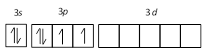
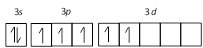
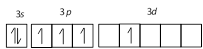
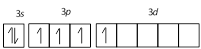
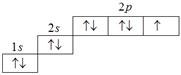
Which element is represented by the following electronic configuration
[MP PMT 1987]
A)
done
clear
B)
done
clear
C)
done
clear
D)
done
clear
View Solution play_arrow
question_answer 78)
If the value of azimuthal quantum number is 3, the possible values of magnetic quantum number would be [MP PMT 1987; RPMT 1999; AFMC 2002; KCET 2002]
A)
done
clear
B)
done
clear
C)
done
clear
D)
done
clear
View Solution play_arrow
question_answer 79)
Krypton \[{{(}_{36}}Kr)\] has the electronic configuration \[{{(}_{18}}Ar)\] \[4{{s}^{2}},3{{d}^{10}},4{{p}^{6}}\]. The \[{{37}^{th}}\] electron will go into which one of the following sub-levels [CBSE PMT 1989; CPMT 1989; EAMCET 1991]
A)
done
clear
B)
done
clear
C)
done
clear
D)
done
clear
View Solution play_arrow
question_answer 80)
If an electron has spin quantum number of \[+\frac{1}{2}\] and a magnetic quantum number of \[-1\], it cannot be presented in an [CBSE PMT 1989; UPSEAT 2001]
A)
done
clear
B)
done
clear
C)
done
clear
D)
done
clear
View Solution play_arrow
question_answer 81)
The azimuthal quantum number is related to [BHU 1987, 95]
A)
done
clear
B)
done
clear
C)
done
clear
D)
done
clear
View Solution play_arrow
question_answer 82)
The total number of electrons that can be accommodated in all the orbitals having principal quantum number 2 and azimuthal quantum number 1 is [CPMT 1971, 89, 91]
A)
done
clear
B)
done
clear
C)
done
clear
D)
done
clear
View Solution play_arrow
question_answer 83)
Electronic configuration of \[C\] is [CPMT 1975]
A)
done
clear
B)
done
clear
C)
done
clear
D)
done
clear
View Solution play_arrow
question_answer 84)
There is no difference between a \[2p\] and a \[3p\]orbital regarding [BHU 1981]
A)
done
clear
B)
done
clear
C)
done
clear
D)
done
clear
View Solution play_arrow
question_answer 85)
The electronic configuration of chromium is [MP PMT 1993; MP PET 1995; BHU 2001; BCECE 2005]
A)
done
clear
B)
done
clear
C)
done
clear
D)
done
clear
View Solution play_arrow
question_answer 86)
The shape of \[p\]-orbital is [MP PMT 1993]
A)
done
clear
B)
done
clear
C)
done
clear
D)
done
clear
View Solution play_arrow
question_answer 87)
The electronic configuration (outermost) of \[M{{n}^{+2}}\] ion (atomic number of \[Mn=25\]) in its ground state is [MP PET 1993]
A)
done
clear
B)
done
clear
C)
done
clear
D)
done
clear
View Solution play_arrow
question_answer 88)
The principal quantum number represents [CPMT 1991]
A)
done
clear
B)
done
clear
C)
done
clear
D)
done
clear
View Solution play_arrow
question_answer 89)
When the azimuthal quantum number has a value of \[l=1\], the shape of the orbital is [MP PET 1993]
A)
done
clear
B)
done
clear
C)
done
clear
D)
done
clear
View Solution play_arrow
question_answer 90)
How many electrons can be accommodated in a sub-shell for which \[n=3,\,l=1\] [CBSE PMT 1990]
A)
done
clear
B)
done
clear
C)
done
clear
D)
done
clear
View Solution play_arrow
question_answer 91)
For azimuthal quantum number \[l=3\], the maximum number of electrons will be [CBSE PMT 1991; EAMCET 1991; RPMT 2002; CBSE PMT 2002]
A)
done
clear
B)
done
clear
C)
done
clear
D)
done
clear
View Solution play_arrow
question_answer 92)
An ion has 18 electrons in the outermost shell, it is [CBSE PMT 1990]
A)
done
clear
B)
done
clear
C)
done
clear
D)
done
clear
View Solution play_arrow
question_answer 93)
The order of filling of electrons in the orbitals of an atom will be [CBSE PMT 1991]
A)
done
clear
B)
done
clear
C)
done
clear
D)
done
clear
View Solution play_arrow
question_answer 94)
The quantum number which may be designated by \[s,\,p,\,d\] and \[f\] instead of number is BHU 1980]
A)
done
clear
B)
done
clear
C)
done
clear
D)
done
clear
View Solution play_arrow
question_answer 95)
Which of the following represents the correct sets of the four quantum numbers of a \[4d\] electron [MNR 1992; UPSEAT 2001; J&K CET 2005]
A)
done
clear
B)
done
clear
C)
done
clear
D)
done
clear
View Solution play_arrow
question_answer 96)
Which of the following statements is not correct for an electron that has the quantum numbers \[n=4\] and \[m=2\] [MNR 1993]
A)
done
clear
B)
done
clear
C)
done
clear
D)
done
clear
View Solution play_arrow
question_answer 97)
The set of quantum numbers not applicable for an electron in an atom is [MNR 1994]
A)
done
clear
B)
done
clear
C)
done
clear
D)
done
clear
View Solution play_arrow
question_answer 98)
Correct configuration of \[F{{e}^{+3}}\] [26] is [CPMT 1994; BHU 1995; KCET 1992]
A)
done
clear
B)
done
clear
C)
done
clear
D)
done
clear
View Solution play_arrow
question_answer 99)
Azimuthal quantum number for last electron of \[Na\] atom is [BHU 1995]
A)
done
clear
B)
done
clear
C)
done
clear
D)
done
clear
View Solution play_arrow
question_answer 100)
A \[3p\]orbital has [IIT 1995]
A)
done
clear
B)
done
clear
C)
done
clear
D)
done
clear
View Solution play_arrow
question_answer 101)
All electrons on the \[4p\] sub-shell must be characterized by the quantum number(s) [MP PET 1996]
A)
done
clear
B)
done
clear
C)
done
clear
D)
done
clear
View Solution play_arrow
question_answer 102)
The electronic configuration of the element of atomic number 27 is
A)
done
clear
B)
done
clear
C)
done
clear
D)
done
clear
View Solution play_arrow
question_answer 103)
When the value of the principal quantum number \[n\] is 3, the permitted values of the azimuthal quantum numbers \[l\] and the magnetic quantum numbers \[m\] , are
A)
done
clear
B)
done
clear
C)
done
clear
D)
done
clear
View Solution play_arrow
question_answer 104)
The number of possible spatial orientations of an electron in an atom is given by its
A)
done
clear
B)
done
clear
C)
done
clear
D)
done
clear
View Solution play_arrow
question_answer 105)
Which of the following sets of orbitals may degenerate
A)
done
clear
B)
done
clear
C)
done
clear
D)
done
clear
View Solution play_arrow
question_answer 106)
The set of quantum numbers \[n=3,\,l=0,\,m=0,\,s=-1/2\] belongs to the element
A)
done
clear
B)
done
clear
C)
done
clear
D)
done
clear
View Solution play_arrow
question_answer 107)
An electron has principal quantum number 3. The number of its (i) sub-shells and (ii) orbitals would be respectively [MP PET 1997]
A)
done
clear
B)
done
clear
C)
done
clear
D)
done
clear
View Solution play_arrow
question_answer 108)
What is the electronic configuration of \[C{{u}^{2+}}(Z=29)\] of least position [MP PET/PMT 1998; MP PET 2001]
A)
done
clear
B)
done
clear
C)
done
clear
D)
done
clear
View Solution play_arrow
question_answer 109)
The correct electronic configuration of \[Ti(Z=22)\] atom is [MP PMT 1999]
A)
done
clear
B)
done
clear
C)
done
clear
D)
done
clear
View Solution play_arrow
question_answer 110)
Which of the following configuration is correct for iron [CBSE PMT 1999]
A)
done
clear
B)
done
clear
C)
done
clear
D)
done
clear
View Solution play_arrow
question_answer 111)
Which of the following set of quantum numbers belong to highest energy [CPMT 1999]
A)
done
clear
B)
done
clear
C)
done
clear
D)
done
clear
View Solution play_arrow
question_answer 112)
Which quantum number will determine the shape of the subshell [CPMT 1999; Pb. PMT 1998]
A)
done
clear
B)
done
clear
C)
done
clear
D)
done
clear
View Solution play_arrow
question_answer 113)
For the \[n=2\] energy level, how many orbitals of all kinds are possible [Bihar CEE 1995]
A)
done
clear
B)
done
clear
C)
done
clear
D)
done
clear
View Solution play_arrow
question_answer 114)
Which one is in the ground state [DPMT 1996]
A)
B)
C)
D)
View Solution play_arrow
question_answer 115)
When the principal quantum number \[(n=3)\], the possible values of azimuthal quantum number (\[l\]) is [Bihar MEE 1996; KCET 2000]
A)
done
clear
B)
done
clear
C)
done
clear
D)
done
clear
E)
done
clear
View Solution play_arrow
question_answer 116)
Which statement is not correct for \[n=5\], \[m=3\] [CPMT 1996]
A)
done
clear
B)
done
clear
C)
done
clear
D)
done
clear
View Solution play_arrow
question_answer 117)
\[1{{s}^{2}}2{{s}^{2}}2{{p}^{6}}3{{s}^{1}}\] shows configuration of [CPMT 1996]
A)
done
clear
B)
done
clear
C)
done
clear
D)
done
clear
View Solution play_arrow
question_answer 118)
Five valence electrons of \[{{p}^{15}}\] are labelled as
If the spin quantum of \[B\] and \[Z\] is \[+\frac{1}{2}\], the group of electrons with three of the quantum number same are [JIPMER 1997]
A)
done
clear
B)
done
clear
C)
done
clear
D)
done
clear
View Solution play_arrow
question_answer 119)
Electronic configuration of \[S{{c}^{21}}\] is [BHU 1997]
A)
done
clear
B)
done
clear
C)
done
clear
D)
done
clear
View Solution play_arrow
question_answer 120)
If \[n+l=6\], then total possible number of subshells would be [RPMT 1997]
A)
done
clear
B)
done
clear
C)
done
clear
D)
done
clear
View Solution play_arrow
question_answer 121)
An electron having the quantum numbers \[n=4,\,l=3,\,m=0\], \[s=-\frac{1}{2}\] would be in the orbital [Orissa JEE 1997]
A)
done
clear
B)
done
clear
C)
done
clear
D)
done
clear
View Solution play_arrow
question_answer 122)
Which of the following sets of quantum numbers is not allowed [Orissa JEE 1997]
A)
done
clear
B)
done
clear
C)
done
clear
D)
done
clear
View Solution play_arrow
question_answer 123)
For which of the following sets of four quantum numbers, an electron will have the highest energy [CBSE PMT 1994]
A)
done
clear
B)
done
clear
C)
done
clear
D)
done
clear
View Solution play_arrow
question_answer 124)
The electronic configuration of gadolinium (atomic no. 64) is [CBSE PMT 1997]
A)
done
clear
B)
done
clear
C)
done
clear
D)
done
clear
View Solution play_arrow
question_answer 125)
An \[{{e}^{-}}\] has magnetic quantum number as \[-3\], what is its principal quantum number [BHU 1998]
A)
done
clear
B)
done
clear
C)
done
clear
D)
done
clear
View Solution play_arrow
question_answer 126)
The number of quantum numbers required to describe an electron in an atom completely is [CET Pune 1998]
A)
done
clear
B)
done
clear
C)
done
clear
D)
done
clear
View Solution play_arrow
question_answer 127)
The electronic configuration \[1{{s}^{2}}2{{s}^{2}}2p_{x}^{1}2p_{y}^{1}2p_{z}^{1}\] [AFMC 1997; Pb. PMT 1999; CBSE PMT 2001; AIIMS 2001]
A)
done
clear
B)
done
clear
C)
done
clear
D)
done
clear
View Solution play_arrow
question_answer 128)
Which one of the following set of quantum numbers is not possible for \[4p\] electron [EAMCET 1998]
A)
done
clear
B)
done
clear
C)
done
clear
D)
done
clear
View Solution play_arrow
question_answer 129)
Which of the following orbital is not possible [RPMT 1999]
A)
done
clear
B)
done
clear
C)
done
clear
D)
done
clear
View Solution play_arrow
question_answer 130)
Which set of quantum numbers for an electron of an atom is not possible [RPMT; DCE 1999]
A)
done
clear
B)
done
clear
C)
done
clear
D)
done
clear
View Solution play_arrow
question_answer 131)
Electronic configuration of ferric ion is [RPET 2000]
A)
done
clear
B)
done
clear
C)
done
clear
D)
done
clear
View Solution play_arrow
question_answer 132)
What is the maximum number of electrons which can be accommodated in an atom in which the highest principal quantum number value is 4 [MP PMT 2000]
A)
done
clear
B)
done
clear
C)
done
clear
D)
done
clear
View Solution play_arrow
question_answer 133)
Which of the following electronic configurations is not possible [CPMT 2000]
A)
done
clear
B)
done
clear
C)
done
clear
D)
done
clear
View Solution play_arrow
question_answer 134)
The electronic configuration of an element is \[1{{s}^{2}}2{{s}^{2}}2{{p}^{6}}3{{s}^{2}}3{{p}^{6}}3{{d}^{5}}4{{s}^{1}}\]. This represents its [IIT Screening 2000]
A)
done
clear
B)
done
clear
C)
done
clear
D)
done
clear
View Solution play_arrow
question_answer 135)
Which of the following set of quantum numbers is possible [AIIMS 2001]
A)
done
clear
B)
done
clear
C)
done
clear
D)
done
clear
View Solution play_arrow
question_answer 136)
Which of the following set of quantum number is not valid [AIIMS 2001]
A)
done
clear
B)
done
clear
C)
done
clear
D)
done
clear
View Solution play_arrow
question_answer 137)
Which one pair of atoms or ions will have same configuration [JIPMER 2001]
A)
done
clear
B)
done
clear
C)
done
clear
D)
done
clear
View Solution play_arrow
question_answer 138)
Which of the following sets of quantum number is not possible [MP PET 2001]
A)
done
clear
B)
done
clear
C)
done
clear
D)
done
clear
View Solution play_arrow
question_answer 139)
Which of the following set of quantum numbers is correct for the 19th electron of chromium [DCE 2001]
A)
done
clear
B)
done
clear
C)
done
clear
D)
done
clear
View Solution play_arrow
question_answer 140)
When the value of azimuthal quantum number is 3, magnetic quantum number can have values [DPMT 2001]
A)
done
clear
B)
done
clear
C)
done
clear
D)
done
clear
View Solution play_arrow
question_answer 141)
The quantum numbers \[n=2,\,\,l=1\] represent [AFMC 2002]
A)
done
clear
B)
done
clear
C)
done
clear
D)
done
clear
View Solution play_arrow
question_answer 142)
The magnetic quantum number of valence electron of sodium (Na) is [RPMT 2002]
A)
done
clear
B)
done
clear
C)
done
clear
D)
done
clear
View Solution play_arrow
question_answer 143)
Azimuthal quantum number defines [AIIMS 2002]
A)
done
clear
B)
done
clear
C)
done
clear
D)
done
clear
View Solution play_arrow
question_answer 144)
Quantum numbers of an atom can be defined on the basis of [AIIMS 2002]
A)
done
clear
B)
done
clear
C)
done
clear
D)
done
clear
View Solution play_arrow
question_answer 145)
Which of the following has maximum energy [AIIMS 2002]
A)
B)
C)
D)
View Solution play_arrow
question_answer 146)
The total magnetic quantum numbers for d-orbital is given by [Orissa JEE 2002]
A)
done
clear
B)
done
clear
C)
done
clear
D)
done
clear
View Solution play_arrow
question_answer 147)
The outer electronic structure \[3{{s}^{2}}3{{p}^{5}}\] is possessed by [Pb. PMT 2002; Pb. CET 2001]
A)
done
clear
B)
done
clear
C)
done
clear
D)
done
clear
View Solution play_arrow
question_answer 148)
Which of the following set of quantum number is not possible [Pb. PMT 2002]
A)
done
clear
B)
done
clear
C)
done
clear
D)
done
clear
View Solution play_arrow
question_answer 149)
The configuration \[1{{s}^{2}},\,2{{s}^{2}}2{{p}^{5}},\,3{{s}^{1}}\] shows [Pb. PMT 2002]
A)
done
clear
B)
done
clear
C)
done
clear
D)
done
clear
View Solution play_arrow
question_answer 150)
The quantum number ?m? of a free gaseous atom is associated with [AIIMS 2003]
A)
done
clear
B)
done
clear
C)
done
clear
D)
done
clear
View Solution play_arrow
question_answer 151)
Correct statement is [BHU 2003]
A)
done
clear
B)
done
clear
C)
done
clear
D)
done
clear
View Solution play_arrow
question_answer 152)
Number of orbitats in h sub-shell is [BHU 2003]
A)
done
clear
B)
done
clear
C)
done
clear
D)
done
clear
View Solution play_arrow
question_answer 153)
Electronic configuration \[1{{s}^{2}},\,2{{s}^{2}}2{{p}^{6}},\,3{{s}^{2}}3{{p}^{6}}3{{d}^{5}},\,4{{s}^{1}}\] represents [CPMT 2003]
A)
done
clear
B)
done
clear
C)
done
clear
D)
done
clear
View Solution play_arrow
question_answer 154)
Which of the following sets is possible for quantum numbers [RPET 2003]
A)
done
clear
B)
done
clear
C)
done
clear
D)
done
clear
View Solution play_arrow
question_answer 155)
For principle quantum number \[n=4\] the total number of orbitals having \[l=3\] [AIIMS 2004]
A)
done
clear
B)
done
clear
C)
done
clear
D)
done
clear
View Solution play_arrow
question_answer 156)
The number of \[2p\] electrons having spin quantum number \[s=-1/2\] are [KCET 2004]
A)
done
clear
B)
done
clear
C)
done
clear
D)
done
clear
View Solution play_arrow
question_answer 157)
Which of the following sets of quantum numbers is correct for an electron in \[4f\] orbital [AIEEE 2004]
A)
done
clear
B)
done
clear
C)
done
clear
D)
done
clear
View Solution play_arrow
question_answer 158)
Consider the ground state of \[(Z=24)\]. The numbers of electrons with the azimuthal quantum numbers, \[l=1\] and 2 are, respectively [AIEEE 2004]
A)
done
clear
B)
done
clear
C)
done
clear
D)
done
clear
View Solution play_arrow
question_answer 159)
The four quantum numbers of the valence electron of potassium are [DPMT 2004]
A)
done
clear
B)
done
clear
C)
done
clear
D)
done
clear
View Solution play_arrow
question_answer 160)
Which of the following electronic configuration is not possible according to Hund?s rule [Kerala PMT 2004]
A)
done
clear
B)
done
clear
C)
done
clear
D)
done
clear
E)
done
clear
View Solution play_arrow
question_answer 161)
The ground state term symbol for an electronic state is governed by [UPSEAT 2004]
A)
done
clear
B)
done
clear
C)
done
clear
D)
done
clear
View Solution play_arrow
question_answer 162)
The electronic configuration of element with atomic number 24 is [Pb. CET 2004]
A)
done
clear
B)
done
clear
C)
done
clear
D)
done
clear
View Solution play_arrow
question_answer 163)
The maximum number of electrons in \[p\]-orbital with \[n=5,\,m=1\] is [Pb. CET 2003]
A)
done
clear
B)
done
clear
C)
done
clear
D)
done
clear
View Solution play_arrow
question_answer 164)
Number of two electron can have the same values of ?? quantum numbers [UPSEAT 2004]
A)
done
clear
B)
done
clear
C)
done
clear
D)
done
clear
View Solution play_arrow
question_answer 165)
The number of orbitals present in the shell with \[n=4\] is [UPSEAT 2004]
A)
done
clear
B)
done
clear
C)
done
clear
D)
done
clear
View Solution play_arrow
question_answer 166)
Which of the following electronic configuration is not possible [MHCET 2003]
A)
done
clear
B)
done
clear
C)
done
clear
D)
done
clear
View Solution play_arrow
question_answer 167)
\[{{p}_{x}}\] orbital can accommodate [MNR 1990; IIT 1983; MADT Bihar 1995; BCECE 2005]
A)
done
clear
B)
done
clear
C)
done
clear
D)
done
clear
View Solution play_arrow
question_answer 168)
The maximum number of electrons that can be accommodated in \['f'\] sub shell is [CPMT 1983, 84; MP PET/PMT 1988; BITS 1988]
A)
done
clear
B)
done
clear
C)
done
clear
D)
done
clear
View Solution play_arrow
question_answer 169)
The number of electrons which can be accommodated in an orbital is [DPMT 1981; AFMC 1988]
A)
done
clear
B)
done
clear
C)
done
clear
D)
done
clear
View Solution play_arrow
question_answer 170)
The number of electrons in the atom which has 20 protons in the nucleus [CPMT 1981, 93; CBSE PMT 1989]
A)
done
clear
B)
done
clear
C)
done
clear
D)
done
clear
View Solution play_arrow
question_answer 171)
The maximum number of electrons accommodated in \[5f\] orbitals are [MP PET 1996]
A)
done
clear
B)
done
clear
C)
done
clear
D)
done
clear
View Solution play_arrow
question_answer 172)
The maximum number of electrons in an atom with \[l=2\] and \[n=3\] is [MP PET/PMT 1998]
A)
done
clear
B)
done
clear
C)
done
clear
D)
done
clear
View Solution play_arrow
question_answer 173)
The configuration \[1{{s}^{2}}2{{s}^{2}}2{{p}^{5}}3{{s}^{1}}\] shows [AIIMS 1997]
A)
done
clear
B)
done
clear
C)
done
clear
D)
done
clear
View Solution play_arrow
question_answer 174)
For sodium atom the number of electrons with \[m=0\] will be [RPMT 1999]
A)
done
clear
B)
done
clear
C)
done
clear
D)
done
clear
View Solution play_arrow
question_answer 175)
The number of electrons that can be accommodated in \[d{{z}^{2}}\] orbital is [Kurukshetra CEE 2002]
A)
done
clear
B)
done
clear
C)
done
clear
D)
done
clear
View Solution play_arrow
question_answer 176)
Number of unpaired electrons in \[1{{s}^{2}}2{{s}^{2}}2{{p}^{3}}\] is [CPMT 1982; MP PMT 1987; BHU 1987; CBSE PMT 1990; CET Pune 1998; AIIMS 2000]
A)
done
clear
B)
done
clear
C)
done
clear
D)
done
clear
View Solution play_arrow
question_answer 177)
Total number of unpaired electrons in an atom of atomic number 29 is [CPMT 1984, 93]
A)
done
clear
B)
done
clear
C)
done
clear
D)
done
clear
View Solution play_arrow
question_answer 178)
The number of unpaired electrons in \[1{{s}^{2}},\,2{{s}^{2}}2{{p}^{4}}\] is [NCERT 1984; CPMT 1991; MP PMT 1996, 2002]
A)
done
clear
B)
done
clear
C)
done
clear
D)
done
clear
View Solution play_arrow
question_answer 179)
The maximum number of electrons that can be accommodated in a \[3d\] subshell is
A)
done
clear
B)
done
clear
C)
done
clear
D)
done
clear
View Solution play_arrow
question_answer 180)
The maximum number of electrons which each sub-shell can occupy is [Pb. CET 1989]
A)
done
clear
B)
done
clear
C)
done
clear
D)
done
clear
View Solution play_arrow
question_answer 181)
Number of unpaired electrons in the ground state of beryllium atom is
A)
done
clear
B)
done
clear
C)
done
clear
D)
done
clear
View Solution play_arrow
question_answer 182)
How many unpaired electrons are present in \[N{{i}^{2+}}\] cation (atomic number = 28) [IIT 1981; MNR 1984; MP PMT 1995; Kerala PMT 2003]
A)
done
clear
B)
done
clear
C)
done
clear
D)
done
clear
View Solution play_arrow
question_answer 183)
The number of unpaired electrons in an \[{{O}_{2}}\] molecule is [MNR 1983]
A)
done
clear
B)
done
clear
C)
done
clear
D)
done
clear
View Solution play_arrow
question_answer 184)
The number of unpaired electrons in a chromic ion \[C{{r}^{3+}}\] (atomic number = 24) is [MNR 1986; CPMT 1992]
A)
done
clear
B)
done
clear
C)
done
clear
D)
done
clear
View Solution play_arrow
question_answer 185)
\[3{{d}^{10}}4{{s}^{0}}\] electronic configuration exhibits by
A)
done
clear
B)
done
clear
C)
done
clear
D)
done
clear
View Solution play_arrow
question_answer 186)
Which of the following metal ions will have maximum number of unpaired electrons [CPMT 1996]
A)
done
clear
B)
done
clear
C)
done
clear
D)
done
clear
View Solution play_arrow
question_answer 187)
Which of the metal ion will have highest number of unpaired electrons
A)
done
clear
B)
done
clear
C)
done
clear
D)
done
clear
View Solution play_arrow
question_answer 188)
The maximum number of unpaired electron can be present in \[d\]orbitals are
A)
done
clear
B)
done
clear
C)
done
clear
D)
done
clear
View Solution play_arrow
question_answer 189)
The molecule having one unpaired electron is
A)
done
clear
B)
done
clear
C)
done
clear
D)
done
clear
View Solution play_arrow
question_answer 190)
A filled or half-filled set of \[p\] or \[d\]-orbitals is spherically symmetric. Point out the species which has spherical symmetry [NCERT 1983]
A)
done
clear
B)
done
clear
C)
done
clear
D)
done
clear
View Solution play_arrow
question_answer 191)
The atom of the element having atomic number 14 should have [AMU 1984]
A)
done
clear
B)
done
clear
C)
done
clear
D)
done
clear
View Solution play_arrow
question_answer 192)
An atom has 2 electrons in \[K\] shell, 8 electrons in \[L\] shell and 6 electrons in \[M\] shell. The number of \[s\]-electrons present in that element is [CPMT 1989]
A)
done
clear
B)
done
clear
C)
done
clear
D)
done
clear
View Solution play_arrow
question_answer 193)
The number of unpaired electrons in carbon atom in excited state is [MNR 1987]
A)
done
clear
B)
done
clear
C)
done
clear
D)
done
clear
View Solution play_arrow
question_answer 194)
Maximum number of electrons present in \['N'\] shell is [EAMCET 1984]
A)
done
clear
B)
done
clear
C)
done
clear
D)
done
clear
View Solution play_arrow
question_answer 195)
The number of \[d\] electrons in \[F{{e}^{+2}}\] (atomic number of \[Fe=26\]) is not equal to that of the [MNR 1993]
A)
done
clear
B)
done
clear
C)
done
clear
D)
done
clear
View Solution play_arrow
question_answer 196)
A transition metal \[X\] has a configuration \[[Ar]3{{d}^{4}}\] in its \[+3\] oxidation state. Its atomic number is [EAMCET 1990]
A)
done
clear
B)
done
clear
C)
done
clear
D)
done
clear
View Solution play_arrow
question_answer 197)
The total number of electrons present in all the \[p\]-orbitals of bromine are [MP PET 1994]
A)
done
clear
B)
done
clear
C)
done
clear
D)
done
clear
View Solution play_arrow
question_answer 198)
Which of the following has the maximum number of unpaired electrons [IIT 1996]
A)
done
clear
B)
done
clear
C)
done
clear
D)
done
clear
View Solution play_arrow
question_answer 199)
Which of the following has more unpaired \[d\]-electrons [CBSE PMT 1999]
A)
done
clear
B)
done
clear
C)
done
clear
D)
done
clear
View Solution play_arrow
question_answer 200)
Maximum electrons in a \[d\]-orbital are [CPMT 1999]
A)
done
clear
B)
done
clear
C)
done
clear
D)
done
clear
View Solution play_arrow
question_answer 201)
The number of unpaired electrons in \[F{{e}^{3+}}(Z=26)\] are [KCET 2000]
A)
done
clear
B)
done
clear
C)
done
clear
D)
done
clear
View Solution play_arrow
question_answer 202)
How many unpaired electrons are present in cobalt [Co] metal [RPMT 2002]
A)
done
clear
B)
done
clear
C)
done
clear
D)
done
clear
View Solution play_arrow
question_answer 203)
The number of unpaired electrons in nitrogen is [Pb. CET 2002]
A)
done
clear
B)
done
clear
C)
done
clear
D)
done
clear
View Solution play_arrow
question_answer 204)
Which of the following has the least energy
A)
done
clear
B)
done
clear
C)
done
clear
D)
done
clear
View Solution play_arrow
question_answer 205)
Pauli's exclusion principle states that [CPMT 1983, 84]
A)
done
clear
B)
done
clear
C)
done
clear
D)
done
clear
View Solution play_arrow
question_answer 206)
For the energy levels in an atom, which one of the following statements is correct [AIIMS 1983]
A)
done
clear
B)
done
clear
C)
done
clear
D)
done
clear
View Solution play_arrow
question_answer 207)
The statements [AIIMS 1982] (i) In filling a group of orbitals of equal energy, it is energetically preferable to assign electrons to empty orbitals rather than pair them into a particular orbital. (ii) When two electrons are placed in two different orbitals, energy is lower if the spins are parallelare valid for
A)
done
clear
B)
done
clear
C)
done
clear
D)
done
clear
View Solution play_arrow
question_answer 208)
According to Aufbau's principle, which of the three \[4d,\,5p\] and \[5s\]will be filled with electrons first [MADT Bihar 1984]
A)
done
clear
B)
done
clear
C)
done
clear
D)
done
clear
View Solution play_arrow
question_answer 209)
The energy of an electron of \[2{{p}_{y}}\] orbital is [AMU 1984]
A)
done
clear
B)
done
clear
C)
done
clear
D)
done
clear
View Solution play_arrow
question_answer 210)
Which of the following principles/rules limits the maximum number of electrons in an orbital to two [CBSE PMT 1989]
A)
done
clear
B)
done
clear
C)
done
clear
D)
done
clear
View Solution play_arrow
question_answer 211)
The electrons would go to lower energy levels first and then to higher energy levels according to which of the following [BHU 1990; MP PMT 1993]
A)
done
clear
B)
done
clear
C)
done
clear
D)
done
clear
View Solution play_arrow
question_answer 212)
Energy of atomic orbitals in a particular shell is in the order [AFMC 1990]
A)
done
clear
B)
done
clear
C)
done
clear
D)
done
clear
View Solution play_arrow
question_answer 213)
Aufbau principle is not satisfied by [MP PMT 1997]
A)
done
clear
B)
done
clear
C)
done
clear
D)
done
clear
View Solution play_arrow
question_answer 214)
Which of the following explains the sequence of filling the electrons in different shells [AIIMS 1998; BHU 1999]
A)
done
clear
B)
done
clear
C)
done
clear
D)
done
clear
View Solution play_arrow
question_answer 215)
Aufbau principle is obeyed in which of the following electronic configurations [AFMC 1999]
A)
done
clear
B)
done
clear
C)
done
clear
D)
done
clear
View Solution play_arrow
question_answer 216)
Following Hund?s rule which element contains six unpaired electron [RPET 2000]
A)
done
clear
B)
done
clear
C)
done
clear
D)
done
clear
View Solution play_arrow
question_answer 217)
Electron enters the sub-shell for which \[(n+l)\] value is minimum. This is enunciated as [RPMT 2000]
A)
done
clear
B)
done
clear
C)
done
clear
D)
done
clear
View Solution play_arrow
question_answer 218)
The atomic orbitals are progressively filled in order of increasing energy. This principle is called as [MP PET 2001]
A)
done
clear
B)
done
clear
C)
done
clear
D)
done
clear
View Solution play_arrow
question_answer 219)
The correct order of increasing energy of atomic orbitals is [MP PET 2002]
A)
done
clear
B)
done
clear
C)
done
clear
D)
done
clear
View Solution play_arrow
question_answer 220)
The orbital with maximum energy is [CPMT 2002]
A)
done
clear
B)
done
clear
C)
done
clear
D)
done
clear
View Solution play_arrow
question_answer 221)
p-orbitals of an atom in presence of magnetic field are [Pb. PMT 2002]
A)
done
clear
B)
done
clear
C)
done
clear
D)
done
clear
View Solution play_arrow
question_answer 222)
Orbital angular momentum for a d-electron is [MP PET 2003]
A)
done
clear
B)
done
clear
C)
done
clear
D)
done
clear
View Solution play_arrow
question_answer 223)
Number of nodal centres for 2s orbital [RPET 2003]
A)
done
clear
B)
done
clear
C)
done
clear
D)
done
clear
View Solution play_arrow
question_answer 224)
The orbital angular momentum of an electron in \[2s\]-orbital is [MP PET 2004]
A)
done
clear
B)
done
clear
C)
done
clear
D)
done
clear
View Solution play_arrow
question_answer 225)
The maximum number of electrons present in an orbit \[l=3\], is [Pb. PMT 2004]
A)
done
clear
B)
done
clear
C)
done
clear
D)
done
clear
View Solution play_arrow
question_answer 226)
Number of unpaired electrons in \[M{{n}^{4+}}\] is [DPMT 2005]
A)
done
clear
B)
done
clear
C)
done
clear
D)
done
clear
View Solution play_arrow
question_answer 227)
Which of the following sequence is correct as per Aufbau principle [DPMT 2005]
A)
done
clear
B)
done
clear
C)
done
clear
D)
done
clear
View Solution play_arrow
question_answer 228)
Electronic configuration of deuterium atom is [J&K CET 2005]
A)
done
clear
B)
done
clear
C)
done
clear
D)
done
clear
View Solution play_arrow

 done
clear
done
clear
 done
clear
done
clear
 done
clear
done
clear
 done
clear
done
clear
 done
clear
done
clear
 done
clear
done
clear
 done
clear
done
clear
 done
clear
done
clear
 done
clear
done
clear
 done
clear
done
clear
 done
clear
done
clear
 done
clear
done
clear







 [MP PMT 1987]
  If the spin quantum of \[B\] and \[Z\] is \[+\frac{1}{2}\], the group of electrons with three of the quantum number same are [JIPMER 1997]