
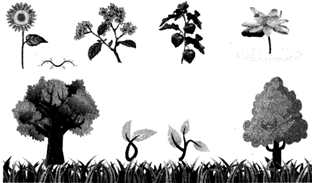
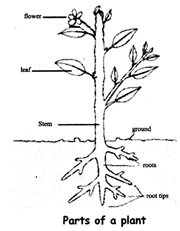
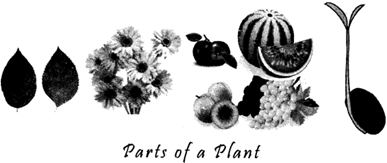
 PARTS OF PLANTS
 TYPES OF PLANTS
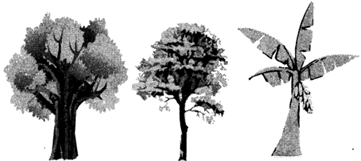
1. Trees are the large plants with a tall, strong and woody stem.
(a) Some stems are thick, strong and woody. They are covered with bark. For example: A stem of Neem.
(b) Some stems are thick but they are soft. For example: A banana stem.
TYPES OF PLANTS
1. Trees are the large plants with a tall, strong and woody stem.
(a) Some stems are thick, strong and woody. They are covered with bark. For example: A stem of Neem.
(b) Some stems are thick but they are soft. For example: A banana stem.
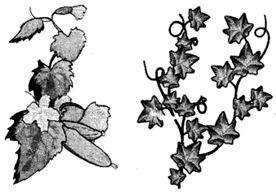
 2. Climbers and Creepers grow along the ground or up the sides of walls or trees. These have a weak stem. These cannot grow erect without support. For example: Money Plant, Watermelon.
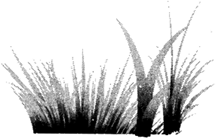
 3. Grass is of many kinds. They can be short or tall, brown, yellow or green.
 4. Shrubs are small plants. They have many separate stems which grow from near the ground. The stems are hard and do not bend easily.
 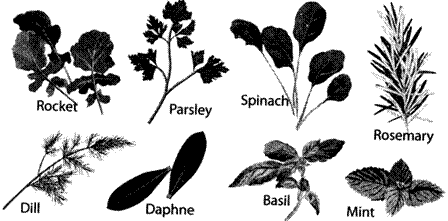 5. Herbs are plants that are valued for flavour, scent, medicinal or other qualities. Weeds are also herbs. Weeds are unwanted plants that grow where we don't want them to grow! They can grow almost everywhere
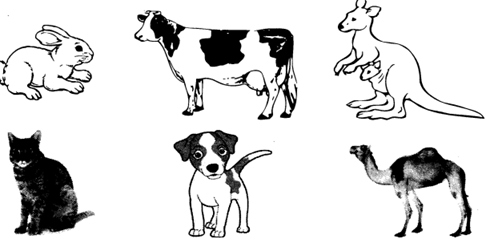
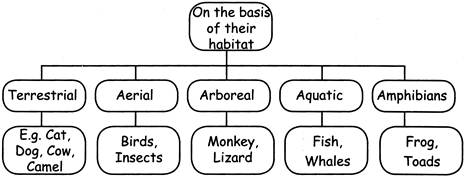 Terrestrial animals are those that live on the land, either completely or mostly inside burrows below the surface. "Terre" means earth and terrestrial means "of the earth". Terrestrial animals have various features that enable them to live on land. They have legs to walk. They have well-developed sense organs. Their claws and teeth are very sharp which enables them to catch and eat their prey. For example: Rabbit, Cow, Kangaroo, Cat, dog, Camel.
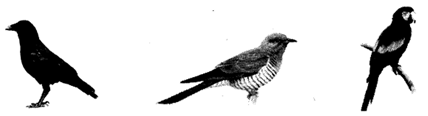
 An aerial animal is any creature that spends time in the air, typically in flight. Their bones are light and hollow to make their movement easy in the air. They fly with the help of wings. For example birds and insects.
Birds have feathers, a beak and no teeth. They eat fruits, nuts, plants, seeds, nectar and various small animals. Do you know that birds also talk to each other and also give signals to their friends. You must have heard the voices of Parrots, Crows and Cuckoos. Some parrots (Macaw) are known to copy our voices.
An aerial animal is any creature that spends time in the air, typically in flight. Their bones are light and hollow to make their movement easy in the air. They fly with the help of wings. For example birds and insects.
Birds have feathers, a beak and no teeth. They eat fruits, nuts, plants, seeds, nectar and various small animals. Do you know that birds also talk to each other and also give signals to their friends. You must have heard the voices of Parrots, Crows and Cuckoos. Some parrots (Macaw) are known to copy our voices.
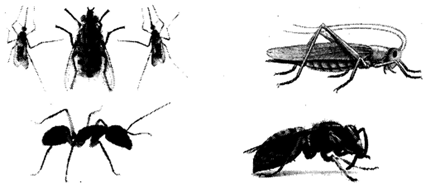
 You must have seen many flies, mosquitos, ants, wasps and grasshoppers at various places in your surroundings. These are all insects. Insects are the most diverse groups of animals on earth. They are found in nearly all environments. Some of these insects can crawl, for example ants, some can fly for example bees and wasps. Have you ever been stung by a wasp? The wasp sting is very painful. You should immediately rush to the doctor in such cases.
 Reptiles
 have scales on their bodies. They are not as slimy as the amphibians. Lizards, snakes, crocodiles, alligators, tortoise and turtle belong to reptile group. Snakes have no legs, they have two teeth called fangs, but they don’t chew food, rather swallow it. Reptiles are cold blooded vertebrates.
Arboreal animals live and dwell in trees. These animals consider trees to be their home base, more...
Reptiles
Reptiles have scales on their bodies. They are not as slimy as the amphibians. Lizards, snakes, crocodiles, alligators, tortoise and turtle belong to reptile group. Snakes have no legs, they have two teeth called fangs, but they don’t chew food, rather swallow it. Reptiles are cold blooded vertebrates.
Arboreal animals live and dwell in trees. These animals consider trees to be their home base, more... 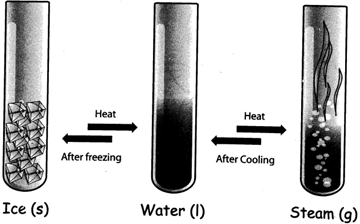 As seen in the picture, we can observe that when ice is heated it gets converted to water which on further heating turns into vapour. When vapour is cooled it becomes water again. And on freezing the water we see the formation of ice.
PROPERTIES OF WATER
Water is
As seen in the picture, we can observe that when ice is heated it gets converted to water which on further heating turns into vapour. When vapour is cooled it becomes water again. And on freezing the water we see the formation of ice.
PROPERTIES OF WATER
Water is
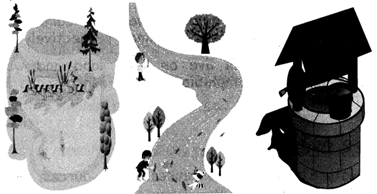 Some of the rain water seeps through the more...

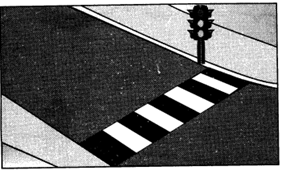 While walking on the road we should always follow these safety rules:
 Historical Preview
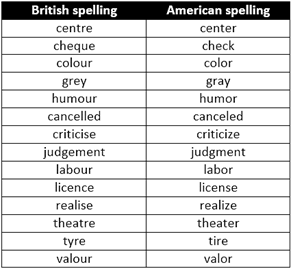
English spelling was first developed in 7th century. In 1066, Norman French became the official language of England.
SIGHT MEMORIZING APPROACH
Historical Preview
English spelling was first developed in 7th century. In 1066, Norman French became the official language of England.
SIGHT MEMORIZING APPROACH
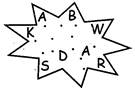 Look at the explosion given above! I bet you can't make the head or tail of it. It is just motley or a zigzag arrangement of letters. It is of no use unless you arrange it in a logical order. It spells BACKWARDS. I am sure you know what it means! So what we need is not just letters but letters arranged in a logical order so as to form meaningful words. Now, Read this! There are bricks of words on a road.
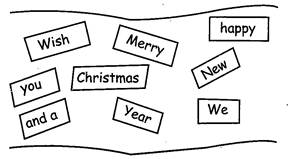 Let us Arrange them to form sentence.
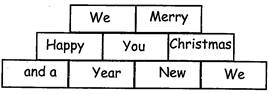 That makes good sense, doesn't it?
The very purpose of this lesson is to help you to make sense out of letters, words and sentence.
Shortcut to Problem Solving
It's always a good idea to read the answer options to figure out the most correct sentence, than to try solving the jumbled sentence yourself. First identify the jumbled sentence then try and solve the predicate. After this find the tense and then the verb.
That makes good sense, doesn't it?
The very purpose of this lesson is to help you to make sense out of letters, words and sentence.
Shortcut to Problem Solving
It's always a good idea to read the answer options to figure out the most correct sentence, than to try solving the jumbled sentence yourself. First identify the jumbled sentence then try and solve the predicate. After this find the tense and then the verb. 
You need to login to perform this action.
You will be redirected in
3 sec