
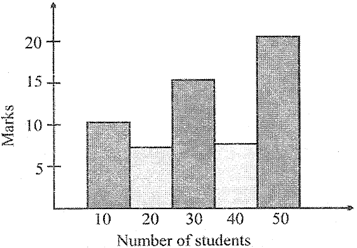
 This is a form of representation like the bar graph out is used tor continuous class interval. It consists of continuous bars drawn adjacent to each other.
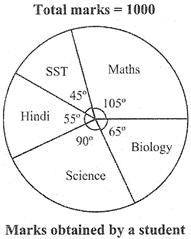
 Pie Chart: A pie-chart is a pictorial representation of the numerical data by sectors of the circle. The area of each sector is proportional to the magnitude of the data represented by the sector.
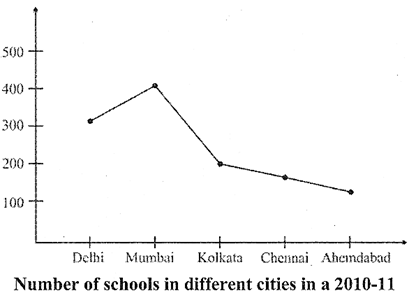
 Line Graph: Line graph is another method of representation of the numerical data. In line graph the collected data are represented by specific points joined together by straight lines. The points are plotted on two dimensional plane one on the horizontal axis and the other on the vertical axis.
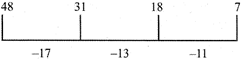 \[\therefore \]It is 7
2. Find 86, 61, 45,......?
\[\therefore \]It is 7
2. Find 86, 61, 45,......?
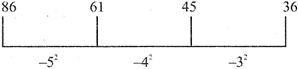 \[\therefore \]It is 36
Ans. Square comprises subtraction of squares of natural numbers as follows:
Therefore, you should have the following at finger tips:
1. Sequence of prime numbers from 1 to 100 i.e., 2, 3, 5, 7, 11, 13,........97
2. Sequence of squares of natural numbers from 1 to 20 i.e., 1,4, 9................361,400
3. Sequence of cubes of natural numbers from 1 to 20 i.e., 1, 8, 27......... ..6859, 8000
more...
\[\therefore \]It is 36
Ans. Square comprises subtraction of squares of natural numbers as follows:
Therefore, you should have the following at finger tips:
1. Sequence of prime numbers from 1 to 100 i.e., 2, 3, 5, 7, 11, 13,........97
2. Sequence of squares of natural numbers from 1 to 20 i.e., 1,4, 9................361,400
3. Sequence of cubes of natural numbers from 1 to 20 i.e., 1, 8, 27......... ..6859, 8000
more...  (a) 18 (b) 22
(c) 16 (d) 14
(e) None of these
Answer (c)
Explanation: Pattern followed in
(a) 18 (b) 22
(c) 16 (d) 14
(e) None of these
Answer (c)
Explanation: Pattern followed in
 is;
is;  Or, \[6=\frac{8}{2}+2=4+2,9=\frac{14}{2}+2=7+2,12=\frac{20}{2}+2=10+2\]
So, ? = \[\frac{28}{2}+2=14+2=16.\] Hence, missing number is 16.
Figure Pattern
Figure pattern is a collection of figures that follows a certain sequence or a certain rule.
Or, \[6=\frac{8}{2}+2=4+2,9=\frac{14}{2}+2=7+2,12=\frac{20}{2}+2=10+2\]
So, ? = \[\frac{28}{2}+2=14+2=16.\] Hence, missing number is 16.
Figure Pattern
Figure pattern is a collection of figures that follows a certain sequence or a certain rule.
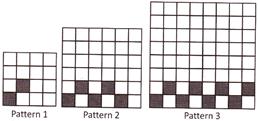 (a) 218 (b) 215
(c) 212 (d) 221
(e) None of these
Answer (a)
Explanation: Number of shaded squares in patter (1) \[=1\times 3-1=2\]
Number of shaded squares in pattern (2)
\[=2\times 3-1=5\]
Number of shaded squares in pattern (3)
\[=3\times 3-1=8\]
Therefore, the pattern followed is:
\[(1\times 3-1),(2\times 3-1),(3\times 3-1)\,..........\]
Hence, the required number of shaded squares in pattern (73)
\[=73\times 3-1=219-1=218.\]
Problems Based on Alphabet Test and Word Formation
Alphabet test is one of the most common topic of reasoning where we come across various types of problems as follow:
(a) 218 (b) 215
(c) 212 (d) 221
(e) None of these
Answer (a)
Explanation: Number of shaded squares in patter (1) \[=1\times 3-1=2\]
Number of shaded squares in pattern (2)
\[=2\times 3-1=5\]
Number of shaded squares in pattern (3)
\[=3\times 3-1=8\]
Therefore, the pattern followed is:
\[(1\times 3-1),(2\times 3-1),(3\times 3-1)\,..........\]
Hence, the required number of shaded squares in pattern (73)
\[=73\times 3-1=219-1=218.\]
Problems Based on Alphabet Test and Word Formation
Alphabet test is one of the most common topic of reasoning where we come across various types of problems as follow:
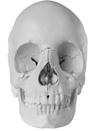
 Human body has the following systems performing certain functions:
 Rib Cage
Ribs make a cage of bones around the chest which is called rib cage. It protects our internal organs. Generally adults have 12 pairs of ribs. There is a long bone at the centre of the chest, which holds the ribs in place, called sternum. Ribs are attached to the backbone. Last two ribs are not attached to the sternum and are known as floating ribs. These floating ribs are attached to the backbone.
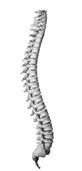
Backbone
It is a hollow tube through which spinal cord runs. It is made up of 33-ring shaped small bones called vertebrae. Backbone is also called as vertebral column.
Rib Cage
Ribs make a cage of bones around the chest which is called rib cage. It protects our internal organs. Generally adults have 12 pairs of ribs. There is a long bone at the centre of the chest, which holds the ribs in place, called sternum. Ribs are attached to the backbone. Last two ribs are not attached to the sternum and are known as floating ribs. These floating ribs are attached to the backbone.
Backbone
It is a hollow tube through which spinal cord runs. It is made up of 33-ring shaped small bones called vertebrae. Backbone is also called as vertebral column.
 Limbs
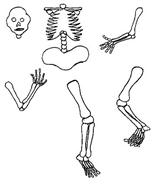
All human beings have two pairs of limbs: the forelimbs (arms) and hindlimbs (legs).
Both forelimb and hindlimb is made up of 30 bones each. Thigh bone or femur is the longest bone in the body.
Limbs
All human beings have two pairs of limbs: the forelimbs (arms) and hindlimbs (legs).
Both forelimb and hindlimb is made up of 30 bones each. Thigh bone or femur is the longest bone in the body.
 Note: The smallest bone of the body called stapes is present in the ear.
Functions of the Skeletal System
The skeletal system has the following functions:
Note: The smallest bone of the body called stapes is present in the ear.
Functions of the Skeletal System
The skeletal system has the following functions:
 Carrot Sweet potato
Stem
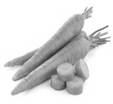
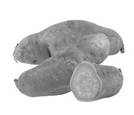
Some plants can reproduce by burying a part of stem in the soil. From stem cutting, new shoots grow from buds. For example,
Carrot Sweet potato
Stem
Some plants can reproduce by burying a part of stem in the soil. From stem cutting, new shoots grow from buds. For example,
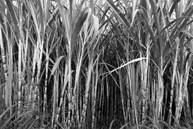
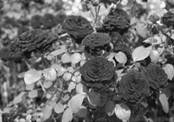 Sugarcane plant Rose plant
Underground Stem
Underground stems like potato and ginger have buds on them from where new shoots will grow on planting them in the soil.
Sugarcane plant Rose plant
Underground Stem
Underground stems like potato and ginger have buds on them from where new shoots will grow on planting them in the soil.
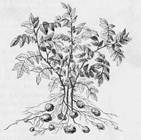
 Potato Onion
S
Similarly, some plants like onions and lilies grow from their bulb shaped stems.
Leaves
In Bryophyllum, new plant grows from their leaves.
Potato Onion
S
Similarly, some plants like onions and lilies grow from their bulb shaped stems.
Leaves
In Bryophyllum, new plant grows from their leaves.

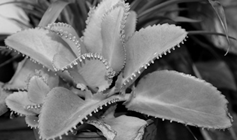 Begonia Bryophyllum
Spores
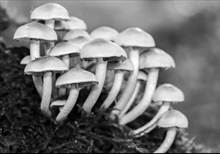
The plants like ferns, mushrooms or mosses, which do not have flowers, produce spores which can be grown into a new plant.
Begonia Bryophyllum
Spores
The plants like ferns, mushrooms or mosses, which do not have flowers, produce spores which can be grown into a new plant.
 Mushroom
Seeds
The fruit bearing plants have seeds inside fruit. When these seeds fall on the soil, new plants grow from them. For example,
Mango, rice, wheat and tomato, etc.
Mushroom
Seeds
The fruit bearing plants have seeds inside fruit. When these seeds fall on the soil, new plants grow from them. For example,
Mango, rice, wheat and tomato, etc.
 Parts of Seed
Seed has an upper covering which is called seed coat. Inside the seed coat, there may be one or two seed leaves called cotyledons. Between them, baby plant grows called seedling. Seedling has radicle growing downwards that develops into root and plumule growing upwards towards the sunlight that develops into shoot. Food for the baby plant is stored in the cotyledons. Number of cotyledons also varies from plant to plant. Maize, wheat and rice have only one cotyledon and are monocot plants. Pea and beans have two cotyledons and are dicot plants. more...
Parts of Seed
Seed has an upper covering which is called seed coat. Inside the seed coat, there may be one or two seed leaves called cotyledons. Between them, baby plant grows called seedling. Seedling has radicle growing downwards that develops into root and plumule growing upwards towards the sunlight that develops into shoot. Food for the baby plant is stored in the cotyledons. Number of cotyledons also varies from plant to plant. Maize, wheat and rice have only one cotyledon and are monocot plants. Pea and beans have two cotyledons and are dicot plants. more...  Whale
Frog
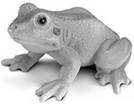
A frog breathes through its lungs on land as well as through its moist skin under water.
A baby frog or tadpole breathes through its gills.
Whale
Frog
A frog breathes through its lungs on land as well as through its moist skin under water.
A baby frog or tadpole breathes through its gills.
 Frog
Insects
Insects like cockroaches, caterpillars and grasshoppers breathe through tiny air holes, called spiracles on their bodies. The spiracles of the body lead to air tubes which form a network that reaches every part of an insect’s body. Air enters the body through this network. The body parts take in oxygen and give out carbon dioxide. The blood of insects does not have the oxygen carrier called haemoglobin. That is why their blood is not red in colour.
Some animals like earthworms can take in oxygen through their thin moist skins.
Frog
Insects
Insects like cockroaches, caterpillars and grasshoppers breathe through tiny air holes, called spiracles on their bodies. The spiracles of the body lead to air tubes which form a network that reaches every part of an insect’s body. Air enters the body through this network. The body parts take in oxygen and give out carbon dioxide. The blood of insects does not have the oxygen carrier called haemoglobin. That is why their blood is not red in colour.
Some animals like earthworms can take in oxygen through their thin moist skins.
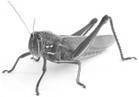
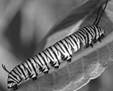
 Grasshopper Caterpillar Cockroach
Amoeba and paramecium are tiny animals which can be seen only through microscope. They breathe through their body surface.
Humans: Humans too breathe through their lungs. We have a pair of lungs in our chest. We breathe through our nose. When we breathe in air, the lungs expand and fill with air. When we breathe out, the chest contracts and pushes out the air with the carbon dioxide from the body.
Grasshopper Caterpillar Cockroach
Amoeba and paramecium are tiny animals which can be seen only through microscope. They breathe through their body surface.
Humans: Humans too breathe through their lungs. We have a pair of lungs in our chest. We breathe through our nose. When we breathe in air, the lungs expand and fill with air. When we breathe out, the chest contracts and pushes out the air with the carbon dioxide from the body.
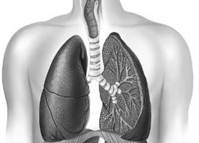 Human Lungs
Eating Habits
All living things need food to get energy, to grow more...
Human Lungs
Eating Habits
All living things need food to get energy, to grow more... 
You need to login to perform this action.
You will be redirected in
3 sec