
 Pakistan has got its first-ever woman Chief Justice of a high court. Justice Tahira Safdar was named as the Chief Justice of the Balochistan High Court by Chief Justice Mian Saqib Nisar. Justice Safdar had made history in 1982 when she became the first woman civil judge in Balochistan. She is currently a member of the three-judge special court conducting the trial of former President Pervez Musharraf for committing treason by proclaiming a state of emergency in November 2007. Pakistan has got its first-ever woman Chief Justice of a high court. Justice Tahira Safdar was named as the Chief Justice of the Balochistan High Court by Chief Justice Mian Saqib Nisar. Justice Safdar had made history in 1982 when she became the first woman civil judge in Balochistan. She is currently a member of the three-judge special court conducting the trial of former President Pervez Musharraf for committing treason by proclaiming a state of emergency in November 2007. |
| Source- The Hindu |
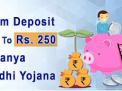 The Union Government has reduced the minimum annual deposit requirement for accounts under Sukanya Samriddhi Yojana from Rs 1000 to Rs 250. The minimum initial deposit to open the account has also been reduced to Rs 250. The move is aimed at enabling more people to take advantage of the girl child savings scheme. The government has amended the Sukanya Samriddhi Account Rules, 2016 for the purpose. The Union Government has reduced the minimum annual deposit requirement for accounts under Sukanya Samriddhi Yojana from Rs 1000 to Rs 250. The minimum initial deposit to open the account has also been reduced to Rs 250. The move is aimed at enabling more people to take advantage of the girl child savings scheme. The government has amended the Sukanya Samriddhi Account Rules, 2016 for the purpose. |
| Source- The Indian Express |
 Considering the increasing incidents of mob lynching, the Union Government constituted a High-Level Committee chaired by the Union Home Secretary Rajiv Gauba to deliberate in the matter and make recommendations. The Secretary, Department of Justice; Secretary, Department of Legal Affairs; Secretary, Legislative Department; and Secretary, Social Justice and Empowerment are the members of the committee. The committee will submit its recommendations to the Government by August 2018. Considering the increasing incidents of mob lynching, the Union Government constituted a High-Level Committee chaired by the Union Home Secretary Rajiv Gauba to deliberate in the matter and make recommendations. The Secretary, Department of Justice; Secretary, Department of Legal Affairs; Secretary, Legislative Department; and Secretary, Social Justice and Empowerment are the members of the committee. The committee will submit its recommendations to the Government by August 2018. |
| Source- The Quint |
 The first meeting of the India-Bangladesh Joint Committee on Border Haats concluded in Agartala, Tripura. During the two day meeting, both sides noted the positive impact of Border Haats on the livelihoods of the people living in areas adjoining the Haats. Extensive discussions were held on issues related to review of operations of the four functional Border Haats and suggestions for improvement, timeline for setting up the six additional Border Haats that had earlier been agreed to by both sides and the roadmap for further expansion of Border Haats. The first meeting of the India-Bangladesh Joint Committee on Border Haats concluded in Agartala, Tripura. During the two day meeting, both sides noted the positive impact of Border Haats on the livelihoods of the people living in areas adjoining the Haats. Extensive discussions were held on issues related to review of operations of the four functional Border Haats and suggestions for improvement, timeline for setting up the six additional Border Haats that had earlier been agreed to by both sides and the roadmap for further expansion of Border Haats. |
| Source- DD News |
 The first meeting of the India-Bangladesh Joint Committee on Border Haats was held in Agartala, Tripura. The Joint Committee also visited Border Haat at Kamlasagar in Sipahijala District, Tripura and Tarapur in Brahmanbaria, Bangladesh. Both sides noted positive impact of Border Haats on livelihoods of people living in areas adjoining Haats. They also held extensive discussions on issues related to review of operations of four functional Border Haats viz. Kalaichar (Meghalaya), Balat (Meghalaya), Kamlasagar (Tripura) and Srinagar (Tripura). They also made suggestions for improvement, timeline for setting up six additional Border Haats that have been agreed to earlier by both sides and roadmap for further expansion of Border Haats. They also agreed that next meeting will be held in Bangladesh on mutually agreed dates. The first meeting of the India-Bangladesh Joint Committee on Border Haats was held in Agartala, Tripura. The Joint Committee also visited Border Haat at Kamlasagar in Sipahijala District, Tripura and Tarapur in Brahmanbaria, Bangladesh. Both sides noted positive impact of Border Haats on livelihoods of people living in areas adjoining Haats. They also held extensive discussions on issues related to review of operations of four functional Border Haats viz. Kalaichar (Meghalaya), Balat (Meghalaya), Kamlasagar (Tripura) and Srinagar (Tripura). They also made suggestions for improvement, timeline for setting up six additional Border Haats that have been agreed to earlier by both sides and roadmap for further expansion of Border Haats. They also agreed that next meeting will be held in Bangladesh on mutually agreed dates. |
|
%20Bill%2C%202018....jpg) Bihar state assembly has passed Bihar Prohibition and Excise (Amendment) Bill, 2018 with 16 amendments to dilute some of stringent provisions in Bihar Prohibition and Excise Act, 2016. The prohibition law was enforced in the state April 2016, banning manufacture, sale or consumption of liquor. Bihar state assembly has passed Bihar Prohibition and Excise (Amendment) Bill, 2018 with 16 amendments to dilute some of stringent provisions in Bihar Prohibition and Excise Act, 2016. The prohibition law was enforced in the state April 2016, banning manufacture, sale or consumption of liquor. |
|
 Los Angeles Times and Pulitzer Prize-winning restaurant critic Jonathan Gold passed away at 57. He became the first restaurant critic to win a Pulitzer for criticism in 2007. Gold died of pancreatic cancer after being diagnosed with the disease. Los Angeles Times and Pulitzer Prize-winning restaurant critic Jonathan Gold passed away at 57. He became the first restaurant critic to win a Pulitzer for criticism in 2007. Gold died of pancreatic cancer after being diagnosed with the disease. |
| Source- The Hindu |
 Union Environment Minister Harsh Vardhan unveiled a state-of-the-art Air Quality and Weather Forecast System– ‘SAFAR’ (System of Air Quality and Weather Forecasting) at Chandni Chowk in New Delhi. The Environment Ministry’s mission model project ‘SAFAR’ is being implemented in four cities of India – Delhi, Pune, Mumbai and Ahmedabad as an operational service. First of its kind in the country, the system was developed indigenously by Indian Institute of Tropical Meteorology, Pune and operationalised by India Meteorological Department (IMD). The giant true colour LED display will give out real-time air quality index on 24x7 basis with colour coding along with 72-hour advance weather forecast. Union Environment Minister Harsh Vardhan unveiled a state-of-the-art Air Quality and Weather Forecast System– ‘SAFAR’ (System of Air Quality and Weather Forecasting) at Chandni Chowk in New Delhi. The Environment Ministry’s mission model project ‘SAFAR’ is being implemented in four cities of India – Delhi, Pune, Mumbai and Ahmedabad as an operational service. First of its kind in the country, the system was developed indigenously by Indian Institute of Tropical Meteorology, Pune and operationalised by India Meteorological Department (IMD). The giant true colour LED display will give out real-time air quality index on 24x7 basis with colour coding along with 72-hour advance weather forecast. |
| Source- Press Information Bureau (PIB) |
 Prime Minister Narendra Modi left on a three-nation visit to Rwanda, Uganda and South Africa. In the first leg of his five-day visit, Mr Modi will reach Rwanda. India will extend two lines of credit of 100 million US Dollars each for agriculture and industrial sectors to Rwanda during his two-day visit to that country. On second leg he will leave for Uganda where he will call on the President. He will have delegation-level talks and will address Indian community. Two lines of credit worth 164 million US Dollars will be extended to Uganda during the visit. In the last leg of his visit, Prime Minister Modi will reach South Africa to attend the 10th BRICS summit at Johannesburg. Prime Minister Narendra Modi left on a three-nation visit to Rwanda, Uganda and South Africa. In the first leg of his five-day visit, Mr Modi will reach Rwanda. India will extend two lines of credit of 100 million US Dollars each for agriculture and industrial sectors to Rwanda during his two-day visit to that country. On second leg he will leave for Uganda where he will call on the President. He will have delegation-level talks and will address Indian community. Two lines of credit worth 164 million US Dollars will be extended to Uganda during the visit. In the last leg of his visit, Prime Minister Modi will reach South Africa to attend the 10th BRICS summit at Johannesburg. |
| Source- AIR World Service |
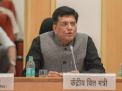 The 28th meeting of GST Council was held in New Delhi. It reduced tax rates on more than 50 items and exempted sanitary napkins, rakhis, stone, marble, wooden deities and Saal leaves from GST. Finance Minister Piyush Goyal chaired the 28th GST Council meeting in New Delhi. The 28th meeting of GST Council was held in New Delhi. It reduced tax rates on more than 50 items and exempted sanitary napkins, rakhis, stone, marble, wooden deities and Saal leaves from GST. Finance Minister Piyush Goyal chaired the 28th GST Council meeting in New Delhi. |
|
Highlights On the changes that have been made in the meeting:
|




You need to login to perform this action.
You will be redirected in
3 sec