
 Airtel Payments Bank has collaborated with Mastercard to create customised financial products for Indian farmers and Small and Medium Enterprises (SMEs). These financial products particularly for those territories where there is less access to bank administrations. The coordinated effort will unite Mastercard’s worldwide and nearby involvement with developing advanced financial solutions and Airtel Payments Bank’s circulation system to arrive at the last mile and its large customer base. The association targets constructing a computerized stage which gives farmers information about advanced farming techniques and association with commercial centres, while at the same time empowering them to receive payments directly in their Airtel Payments Bank account. Airtel Payments Bank has collaborated with Mastercard to create customised financial products for Indian farmers and Small and Medium Enterprises (SMEs). These financial products particularly for those territories where there is less access to bank administrations. The coordinated effort will unite Mastercard’s worldwide and nearby involvement with developing advanced financial solutions and Airtel Payments Bank’s circulation system to arrive at the last mile and its large customer base. The association targets constructing a computerized stage which gives farmers information about advanced farming techniques and association with commercial centres, while at the same time empowering them to receive payments directly in their Airtel Payments Bank account. |
 Life Insurance Corporation of India (LIC) has announced the launch of the Pradhan Mantri Vaya Vandana Yojana, which is a social security scheme for senior citizens. This plan starts from May 26 for three financial years up to March 31, 2023. LIC is solely authorised to work this scheme, which works as a Non-Linked, Non-Participating, Pension Scheme subsidised by the Centre. The policy term is of 10 years and for policies sold during the first financial year up to March 31, 2021, the scheme will provide an assured rate of return of 7.40 per cent once a year payable monthly (which is like 7.66 per cent per annum) for the whole duration of 10 years. Life Insurance Corporation of India (LIC) has announced the launch of the Pradhan Mantri Vaya Vandana Yojana, which is a social security scheme for senior citizens. This plan starts from May 26 for three financial years up to March 31, 2023. LIC is solely authorised to work this scheme, which works as a Non-Linked, Non-Participating, Pension Scheme subsidised by the Centre. The policy term is of 10 years and for policies sold during the first financial year up to March 31, 2021, the scheme will provide an assured rate of return of 7.40 per cent once a year payable monthly (which is like 7.66 per cent per annum) for the whole duration of 10 years. |
 Markets regulator Sebi has launched a mobile application ‘Sebi SCORES’ for convenience of investors to lodge grievances in Sebi Complaints Redress System (SCORES). “SCORES’ mobile app will make it easier for investors to lodge their grievances with Sebi, as they can now access SCORES at their convenience of a smartphone. The mobile app will encourage investors to lodge their complaints on SCORES rather than sending letters to Sebi in physical mode. SCORES is a platform for investors to lodge online complaints with Sebi against listed companies, registered intermediaries and market infrastructure institutions. According to Sebi norms, entities against whom complaints are lodged need to file an action taken report with the regulator within 30 days of receipt of the complaint. Markets regulator Sebi has launched a mobile application ‘Sebi SCORES’ for convenience of investors to lodge grievances in Sebi Complaints Redress System (SCORES). “SCORES’ mobile app will make it easier for investors to lodge their grievances with Sebi, as they can now access SCORES at their convenience of a smartphone. The mobile app will encourage investors to lodge their complaints on SCORES rather than sending letters to Sebi in physical mode. SCORES is a platform for investors to lodge online complaints with Sebi against listed companies, registered intermediaries and market infrastructure institutions. According to Sebi norms, entities against whom complaints are lodged need to file an action taken report with the regulator within 30 days of receipt of the complaint. |
 Indian digital payments platform Paytm’s subsidiary, Paytm Insurance Broking, has received the brokerage licence from the Insurance Regulatory and Authority of India (IRDAI). Paytm will now offer insurance in various categories namely automotive, health and life. In addition to this, Paytm customers can also get policy management and claim settlement at select merchant points. Paytm Insurance Broking aims to support its 16 Million merchant partners to sell its innovative insurance products all over India. Also, it aims to expand the outreach of its products in a hassle-free manner and empower the merchant by providing an alternate income source. Paytm has already partnered with 20 insurance companies and is now planning to get an additional 30 companies in future. Indian digital payments platform Paytm’s subsidiary, Paytm Insurance Broking, has received the brokerage licence from the Insurance Regulatory and Authority of India (IRDAI). Paytm will now offer insurance in various categories namely automotive, health and life. In addition to this, Paytm customers can also get policy management and claim settlement at select merchant points. Paytm Insurance Broking aims to support its 16 Million merchant partners to sell its innovative insurance products all over India. Also, it aims to expand the outreach of its products in a hassle-free manner and empower the merchant by providing an alternate income source. Paytm has already partnered with 20 insurance companies and is now planning to get an additional 30 companies in future. |
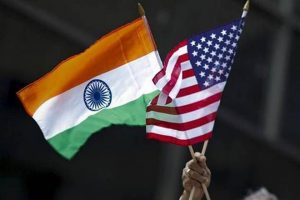 The United States has surpassed China to become India’s top trading partner. According to the Commerce Ministry data, the bilateral trade between the US and India stood at nearly 88 billion dollars in 2018-19 fiscal. During the period, India’s trade with China was at 87.1 billion dollars. During April-December 2019-20, the bilateral trade between the US and India stood at 68 billion dollars against a nearly 65 billion dollars trade with China in the same period. The countries will finalise a free trade agreement (FTA), then the bilateral trade would reach different levels. FTA with the US will be very beneficial for India as the US is the biggest market for domestic goods and services. India’s exports, as well as imports, are increasing with the US, while with China both are declining. America is one of the few countries with which India has a trade surplus. On the other hand, India has a huge trade deficit with China. The data showed that China was India’s top trading partner since 2013-14 till 2017-18. The United States has surpassed China to become India’s top trading partner. According to the Commerce Ministry data, the bilateral trade between the US and India stood at nearly 88 billion dollars in 2018-19 fiscal. During the period, India’s trade with China was at 87.1 billion dollars. During April-December 2019-20, the bilateral trade between the US and India stood at 68 billion dollars against a nearly 65 billion dollars trade with China in the same period. The countries will finalise a free trade agreement (FTA), then the bilateral trade would reach different levels. FTA with the US will be very beneficial for India as the US is the biggest market for domestic goods and services. India’s exports, as well as imports, are increasing with the US, while with China both are declining. America is one of the few countries with which India has a trade surplus. On the other hand, India has a huge trade deficit with China. The data showed that China was India’s top trading partner since 2013-14 till 2017-18. |
 The Mumbai airport has recently launched the world largest temperature-controlled facility to store agro and pharma products. The “Export Cold Zone” launched is capable of holding more than 700 tonnes of cargo. The Mumbai airport has recently launched the world largest temperature-controlled facility to store agro and pharma products. The “Export Cold Zone” launched is capable of holding more than 700 tonnes of cargo. |
|
|
 Birla Estates has launched “LIDEA” for its customers on WhatsApp. “LIDEA” is an interactive AI Powered ChatBot solution launched by Birla Estates for its customers. Birla Estates has launched “LIDEA” for its customers on WhatsApp. “LIDEA” is an interactive AI Powered ChatBot solution launched by Birla Estates for its customers. |
|
 Securities and Exchange Board of India (SEBI) has permitted the market players to use regulatory sandbox on select customers. SEBI will grant limited registration for such testing purposes. The decision has been taken to facilitate the use of latest fintech innovations in capital markets. The decision was taken at the board meeting of the market regulator Securities and Exchange Board of India. Securities and Exchange Board of India (SEBI) has permitted the market players to use regulatory sandbox on select customers. SEBI will grant limited registration for such testing purposes. The decision has been taken to facilitate the use of latest fintech innovations in capital markets. The decision was taken at the board meeting of the market regulator Securities and Exchange Board of India. |
|
 The National Company Law Appellate Tribunal has approved the Rs 19,700 crore resolution plan of JSW Steel to take over the bankrupt Bhushan Power and Steel. The approval comes with the immunity sought by the new owner against investigations being carried out against the erstwhile promoters of Bhushan Power and Steel. This comes after the government recently amended Section 32A of the Insolvency and Bankruptcy Code, providing immunity to the bidders and the insolvent company’s assets from the investigation. The National Company Law Appellate Tribunal has approved the Rs 19,700 crore resolution plan of JSW Steel to take over the bankrupt Bhushan Power and Steel. The approval comes with the immunity sought by the new owner against investigations being carried out against the erstwhile promoters of Bhushan Power and Steel. This comes after the government recently amended Section 32A of the Insolvency and Bankruptcy Code, providing immunity to the bidders and the insolvent company’s assets from the investigation. |
 The US removed India from its list of developing countries that are exempt from investigations into whether they harm American industry with unfairly subsidised exports. The United States Trade Representative (USTR) eliminated a host of countries including Brazil, Indonesia, Hong Kong, South Africa and Argentina. The US removed India from the list on account of it being a G-20 member and having a share of 0.5% or more of world trade. The move has cast a shadow on India being able to restore preferential benefits under the Generalised System of Preference (GSP) as part of its trade talks with the US, as only developing countries are eligible for it. India’s share in global exports was 1.67% in 2018. In global imports, it was 2.57%. The US removed India from its list of developing countries that are exempt from investigations into whether they harm American industry with unfairly subsidised exports. The United States Trade Representative (USTR) eliminated a host of countries including Brazil, Indonesia, Hong Kong, South Africa and Argentina. The US removed India from the list on account of it being a G-20 member and having a share of 0.5% or more of world trade. The move has cast a shadow on India being able to restore preferential benefits under the Generalised System of Preference (GSP) as part of its trade talks with the US, as only developing countries are eligible for it. India’s share in global exports was 1.67% in 2018. In global imports, it was 2.57%. |






You need to login to perform this action.
You will be redirected in
3 sec