
 Electricity
 is a form of energy known as electrical energy. We can convert electrical energy into various other forms of energy, easily.
Electric Circuit
Electricity
Electricity is a form of energy known as electrical energy. We can convert electrical energy into various other forms of energy, easily.
Electric Circuit
 Electric Circuit
The path through which electric current can flow is known as electric circuit. A simple electric circuit. A simple electric circuit is made up of a bulb, wire and a n electric cell. An electric cell has two ends positive terminal and a negative terminal. A wire is connected from positive terminal to negative terminal of the cell and the bulb is connected to the wire so that the current can flow through bulb.
Electric Circuit
The path through which electric current can flow is known as electric circuit. A simple electric circuit. A simple electric circuit is made up of a bulb, wire and a n electric cell. An electric cell has two ends positive terminal and a negative terminal. A wire is connected from positive terminal to negative terminal of the cell and the bulb is connected to the wire so that the current can flow through bulb.
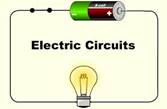 Closed Circuit: If there is no gap in a electric circuit, the circuit is known as closed or complete circuit
Open Circuit: If there is gap in a electric circuit, the circuit is known as open circuit.
Conductors and Insulators
The substances which allow electric current to pass through them are called conductors. Metals like cooper, gold, silver, aluminium, iron, etc. are good conductors of electricity.
The substances which do not allow electric current to pass through them are called insulators. For example wood, plastic, paper, rubber are insulators.
Electric Cell
An electric cell is a device which can generate electric current in a closed circuit. It is small, easily portable and is very useful for us. There are a number of machines like watch, calculators, toys, cars etc. in which electrical cell is used to produce electrical current. Dry cell, button cell, solar cells are the examples of electric cell.
Dry Cell:
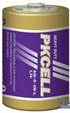
A dry cell is a cylindrical device in which a number of chemicals is stored. It has a metal cap on one side called positive terminal and a metal sheet at other side called negative terminal. It produce electric current from the chemical stored inside it.
An electric bulb is a device which produces light using electrical energy. It consists of a glass bulb fixed on a metal case. The thin wire fixed between the two thick wire is called filament and an inert gas is filled inside the glass bulb. When electric current passes through the filament, it emits light which makes the bulb glow.
Closed Circuit: If there is no gap in a electric circuit, the circuit is known as closed or complete circuit
Open Circuit: If there is gap in a electric circuit, the circuit is known as open circuit.
Conductors and Insulators
The substances which allow electric current to pass through them are called conductors. Metals like cooper, gold, silver, aluminium, iron, etc. are good conductors of electricity.
The substances which do not allow electric current to pass through them are called insulators. For example wood, plastic, paper, rubber are insulators.
Electric Cell
An electric cell is a device which can generate electric current in a closed circuit. It is small, easily portable and is very useful for us. There are a number of machines like watch, calculators, toys, cars etc. in which electrical cell is used to produce electrical current. Dry cell, button cell, solar cells are the examples of electric cell.
Dry Cell:
A dry cell is a cylindrical device in which a number of chemicals is stored. It has a metal cap on one side called positive terminal and a metal sheet at other side called negative terminal. It produce electric current from the chemical stored inside it.
An electric bulb is a device which produces light using electrical energy. It consists of a glass bulb fixed on a metal case. The thin wire fixed between the two thick wire is called filament and an inert gas is filled inside the glass bulb. When electric current passes through the filament, it emits light which makes the bulb glow.
 Electric bulb
An electric bulb is a device which produces light using electrical energy. It consists of a glass bulb fixed on a metal case. The thin wire fixed between the two thick wire is called filament and an inert gas is filled inside the glass bulb. When electrical current passes through the filament, the emits light which makes the bulb glow.
Electric bulb
An electric bulb is a device which produces light using electrical energy. It consists of a glass bulb fixed on a metal case. The thin wire fixed between the two thick wire is called filament and an inert gas is filled inside the glass bulb. When electrical current passes through the filament, the emits light which makes the bulb glow.
 more...
  Habitats
The place where an organism lives is called its habitat. There are various types of habitats.
Habitats
The place where an organism lives is called its habitat. There are various types of habitats.
 Types of Habitats
There are mainly two types of habitats.
(i) Aquatic habitat
(ii) Terrestrial habitat
Types of Habitats
There are mainly two types of habitats.
(i) Aquatic habitat
(ii) Terrestrial habitat
 Aquatic Habitat
A water based habitats is known as aquatic habitats.
Hydrophytes: Plants which live in water
Hydrocoles: Animals which live in aquatic habitat
Phytoplanktons: The microscopic plants which live in water.
Zooplanktons: The microscopic animals which live in water
Aquatic habitat has been divided into three groups
Marine Habitats: Salt water habitats are known as marine habitats.
Costal Habitats: The region where seas meats land, is known as coastal habitats.
Fresh Water Habitats: Lakes, rivers, ponds, are known as fresh water habitats.
Terrestrial Habitats
Land based habitats are known as terrestrial habitats. Terrestrial habitats have been divided into five groups
Aquatic Habitat
A water based habitats is known as aquatic habitats.
Hydrophytes: Plants which live in water
Hydrocoles: Animals which live in aquatic habitat
Phytoplanktons: The microscopic plants which live in water.
Zooplanktons: The microscopic animals which live in water
Aquatic habitat has been divided into three groups
Marine Habitats: Salt water habitats are known as marine habitats.
Costal Habitats: The region where seas meats land, is known as coastal habitats.
Fresh Water Habitats: Lakes, rivers, ponds, are known as fresh water habitats.
Terrestrial Habitats
Land based habitats are known as terrestrial habitats. Terrestrial habitats have been divided into five groups
 Desert Habitats
It is the region of land habitats with very low rainfall.
Xerophytes: The plants which live in desert.
Xerocoles: The animals which live in desert.
Note: the kind of habitat which is characterized by hot and dry places with scarcity of water is called xeric habitat.
Grassland Habitats
This is the region of terrestrial habitats of moderate rainfall.
Rainforest Habitats
This is the region of hot and wet weather with high rainfall.
Tundra Habitats
This is the very cold region of terrestrial habitat which is covered by snow throughout the year.
Mountainous Habitats
This is the region of landform that rises high above the surrounding terrain.
Adaptation in Desert Organisms:
Desert plants have long and extensive root system, with which they go deep in the soil in search of water. The leaves and stems of some plants become thick and store water, e.g. agave, opuntia.
Desert animals like rats, snakes etc. dig deep burrows to live which protects them from extreme heat during the day.
Adaptation in Water Organisms:
Aquatic plants have very short and small roots. Their stems are soft, hollow and light having large spaces filled with air. Submerged leaves are long and narrow whereas floating leaves are large and flat and have waxy upper surface.
Body of water animals are streamlined which are covered by scales and mucous.
They have fins and tail to swim in water and gills for breathing.
Adaptation for Cold Weather:
The animals which live in very cold region have thick fur on their bodies to protect more...
Desert Habitats
It is the region of land habitats with very low rainfall.
Xerophytes: The plants which live in desert.
Xerocoles: The animals which live in desert.
Note: the kind of habitat which is characterized by hot and dry places with scarcity of water is called xeric habitat.
Grassland Habitats
This is the region of terrestrial habitats of moderate rainfall.
Rainforest Habitats
This is the region of hot and wet weather with high rainfall.
Tundra Habitats
This is the very cold region of terrestrial habitat which is covered by snow throughout the year.
Mountainous Habitats
This is the region of landform that rises high above the surrounding terrain.
Adaptation in Desert Organisms:
Desert plants have long and extensive root system, with which they go deep in the soil in search of water. The leaves and stems of some plants become thick and store water, e.g. agave, opuntia.
Desert animals like rats, snakes etc. dig deep burrows to live which protects them from extreme heat during the day.
Adaptation in Water Organisms:
Aquatic plants have very short and small roots. Their stems are soft, hollow and light having large spaces filled with air. Submerged leaves are long and narrow whereas floating leaves are large and flat and have waxy upper surface.
Body of water animals are streamlined which are covered by scales and mucous.
They have fins and tail to swim in water and gills for breathing.
Adaptation for Cold Weather:
The animals which live in very cold region have thick fur on their bodies to protect more...  The living organism & Their Surroundings
The environment consists of both living things and non-living things. Living things are known as biotic components of the environment whereas non-living things are known as abiotic components.
All the living things have been classified into three group’s producers, consumers and decomposers.
The living organism & Their Surroundings
The environment consists of both living things and non-living things. Living things are known as biotic components of the environment whereas non-living things are known as abiotic components.
All the living things have been classified into three group’s producers, consumers and decomposers.
 Producers
 are the living organisms which can make their own food with the help of photosynthesis. All the green plants like mango, peepal, grass etc. are included in this category.
Producers
Producers are the living organisms which can make their own food with the help of photosynthesis. All the green plants like mango, peepal, grass etc. are included in this category.

 Consumers
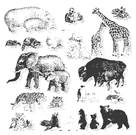
 are the living organisms which consume the food prepared by the green plants. This includes all the animals like tiger, elephant, human etc.
Consumers
Consumers are the living organisms which consume the food prepared by the green plants. This includes all the animals like tiger, elephant, human etc.
 Decomposers
It includes the microorganisms which decomposes dead bodies of plants and animals.
Decomposers
It includes the microorganisms which decomposes dead bodies of plants and animals.
 Balance in the Nature:
All these three producers, consumers and decomposers work together to keep the balance in the nature. Green plants prepare food, consumers eat them and grow and when consumers died, decomposers decomposes their body into simpler substances..
Balance in the Nature:
All these three producers, consumers and decomposers work together to keep the balance in the nature. Green plants prepare food, consumers eat them and grow and when consumers died, decomposers decomposes their body into simpler substances..  Introduction
Time, distance and speed are the characteristics of moving objects. Speed of a moving object is determined by the time taken to travel a distance. Earlier, time of a day was determined by the position of the Sun, seen from the Earth in the sky. Later on, a time measuring device known as Sundial and water clock were used for the measurement of time. The standard unit of time is second and other unit of time is its derived unit. Distance is the shortest length between two points, two places, etc. The standard unit of distance is metre and others are its derived unit. The speed of a running object is determined by the division of distance by time. The unit of speed is meter per second and denoted by m/s. We have studied about the time, distance and speed in previous classes. In this chapter, we will learn detail about the time, distance and speed.
Time
The duration of happening an event is measured in time, and its SI unit is second. Hour, minutes and other units are derived unit of time. Sundial, Sand clock and Water clock are the time measuring devices which were used in ancient days.
Introduction
Time, distance and speed are the characteristics of moving objects. Speed of a moving object is determined by the time taken to travel a distance. Earlier, time of a day was determined by the position of the Sun, seen from the Earth in the sky. Later on, a time measuring device known as Sundial and water clock were used for the measurement of time. The standard unit of time is second and other unit of time is its derived unit. Distance is the shortest length between two points, two places, etc. The standard unit of distance is metre and others are its derived unit. The speed of a running object is determined by the division of distance by time. The unit of speed is meter per second and denoted by m/s. We have studied about the time, distance and speed in previous classes. In this chapter, we will learn detail about the time, distance and speed.
Time
The duration of happening an event is measured in time, and its SI unit is second. Hour, minutes and other units are derived unit of time. Sundial, Sand clock and Water clock are the time measuring devices which were used in ancient days.
 Time Measuring Devices of Ancient Time
There were various types of time measuring devices in ancient world. The modern time measuring devices are based on the principle of ancient time measuring devices.
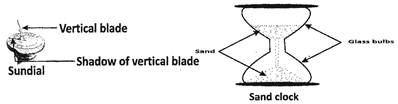
Look at the following pictures of ancient time measuring devices:
Time Measuring Devices of Ancient Time
There were various types of time measuring devices in ancient world. The modern time measuring devices are based on the principle of ancient time measuring devices.
Look at the following pictures of ancient time measuring devices:
 .
Sundial was one of the most popular devices, used in ancient period. The name of sundial itself indicates that it is associated with the sun rays. Shadow of vertical blade on the division of the sundial shows the time of a particular period. Shadow of vertical bar is formed according to the position of the Sun in the sky. Sand clock consists of two glass bulbs which is joined by a narrow pipe. Upper bulb contains sand which flows downward till it gets empty.
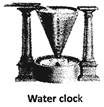
Another ancient time measuring device was water clock. Function of water clock was same as that of sand clock, only water was used instead of sand. Water in the upper part of the clock flow downward and an empty upper part or a filled lower part of the clock was measured as one hour.
Comparison of Different Units of Time
Time is measured in second but the other unit of time is derived unit as discussed above. There is some relation between the units of time with its standard unit. For example, 1 minute is l/60th of one hour and 1 second is 1/ 60th of 1 minute.
Look at the following table of units and comparison more...
.
Sundial was one of the most popular devices, used in ancient period. The name of sundial itself indicates that it is associated with the sun rays. Shadow of vertical blade on the division of the sundial shows the time of a particular period. Shadow of vertical bar is formed according to the position of the Sun in the sky. Sand clock consists of two glass bulbs which is joined by a narrow pipe. Upper bulb contains sand which flows downward till it gets empty.
Another ancient time measuring device was water clock. Function of water clock was same as that of sand clock, only water was used instead of sand. Water in the upper part of the clock flow downward and an empty upper part or a filled lower part of the clock was measured as one hour.
Comparison of Different Units of Time
Time is measured in second but the other unit of time is derived unit as discussed above. There is some relation between the units of time with its standard unit. For example, 1 minute is l/60th of one hour and 1 second is 1/ 60th of 1 minute.
Look at the following table of units and comparison more...  Distance and Speed
The length between two points or two towns is known as the distance between them the unit of distance is metre, kilometre etc. Long distance is measured in kilometre and short distance is measured in metre, centimetre and millimetre.
Look at the following table:
Distance and Speed
The length between two points or two towns is known as the distance between them the unit of distance is metre, kilometre etc. Long distance is measured in kilometre and short distance is measured in metre, centimetre and millimetre.
Look at the following table:
| 1000 metres = 1 kilometre |
| 100 metres = 1 hectometre |
| 10 metres = 1 decametre |
| Metre |
| 1/10 metre = 1 decimetre |
| 1/100 metre = 1 centimetre |
| 1/1000 metre = 1 millimitre |
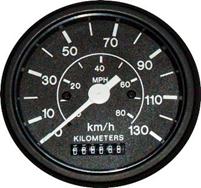 Speedometer is a measuring device which shows the running speed of the vehicle. Odometer is also a measuring device but it shows the distance travelled by the vehicle.
A sensor on the wheel of the vehicle senses the rotation of the wheel and it sends the sensed signal to the speedometer. Speedometer receives the signal and its digital or analog panel show the travelled distance as per the time divisions of the speedometer.
Uniform and non-uniform Speed
When a car runs on a straight path with constant speed then the car is called in uniform speed. If the speed of the car varies with respect to the variation in time then the car is called in non-uniform speed.
Look at the following time distance graph for uniform speed:
Speedometer is a measuring device which shows the running speed of the vehicle. Odometer is also a measuring device but it shows the distance travelled by the vehicle.
A sensor on the wheel of the vehicle senses the rotation of the wheel and it sends the sensed signal to the speedometer. Speedometer receives the signal and its digital or analog panel show the travelled distance as per the time divisions of the speedometer.
Uniform and non-uniform Speed
When a car runs on a straight path with constant speed then the car is called in uniform speed. If the speed of the car varies with respect to the variation in time then the car is called in non-uniform speed.
Look at the following time distance graph for uniform speed:
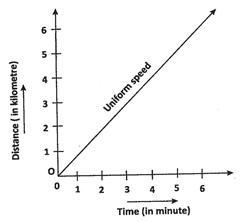 In the graph above, travelled distance in 1 minute is 1 km, in 2 minutes, travelled distance is 2 km. Therefore, speed does not change or remains constant at 1 km per minute (1 km/m) which is called uniform speed and graph of uniform speed is always a straight line.
Look at the following time distance graph for non-uniform speed:
In the graph above, travelled distance in 1 minute is 1 km, in 2 minutes, travelled distance is 2 km. Therefore, speed does not change or remains constant at 1 km per minute (1 km/m) which is called uniform speed and graph of uniform speed is always a straight line.
Look at the following time distance graph for non-uniform speed:
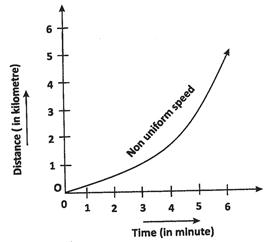 In the time and distance graph above, distance more...
  Relation between Time, Distance and Speed
A car travels a distance of 300 km in 6 hours. The distance travelled by the car
In one hour \[=\frac{\text{Total distance travelled by the car}}{\text{Total time taken by the car}}=\frac{360}{6}=50kmph\]
If the time taken by the car to cover a distance is increased then the speed of the car will decrease. Therefore, the speed of the car is inversely proportional to the time taken by the car and directly proportional to the distance travelled by the car.
If speed of a car is given then the distance travelled by the car can be derived by the formula of the speed of the car.
Let's assume that the speed of the car is 's', total distance travelled by the car is 'd' and time taken by the car to travel the distance of 'd' is 't'.
According to the formula of speed,
\[Speed\,(s)\,=\frac{Dis\tan ce}{Time\,taken\,(t)}\] or \[s=\frac{d}{t}\] or \[d=st\] or \[t=\frac{d}{s}\].
.
Relation between Time, Distance and Speed
A car travels a distance of 300 km in 6 hours. The distance travelled by the car
In one hour \[=\frac{\text{Total distance travelled by the car}}{\text{Total time taken by the car}}=\frac{360}{6}=50kmph\]
If the time taken by the car to cover a distance is increased then the speed of the car will decrease. Therefore, the speed of the car is inversely proportional to the time taken by the car and directly proportional to the distance travelled by the car.
If speed of a car is given then the distance travelled by the car can be derived by the formula of the speed of the car.
Let's assume that the speed of the car is 's', total distance travelled by the car is 'd' and time taken by the car to travel the distance of 'd' is 't'.
According to the formula of speed,
\[Speed\,(s)\,=\frac{Dis\tan ce}{Time\,taken\,(t)}\] or \[s=\frac{d}{t}\] or \[d=st\] or \[t=\frac{d}{s}\].
.
 Units of Speed
The standard unit of distance is metre and standard unit of time is second.
According to the formula of speed \[(s)=\frac{d}{t}=\frac{d\,metre}{t\,\sec ond}\] = metre per second or m/s.
Units of Speed
The standard unit of distance is metre and standard unit of time is second.
According to the formula of speed \[(s)=\frac{d}{t}=\frac{d\,metre}{t\,\sec ond}\] = metre per second or m/s.

 Units of Speed
The standard unit of distance is metre and standard unit of time is second.
According to the formula of speed \[(s)=\frac{d}{t}=\frac{d\,metre}{t\,\sec ond}\] = metre per second or m/s.
Units of Speed
The standard unit of distance is metre and standard unit of time is second.
According to the formula of speed \[(s)=\frac{d}{t}=\frac{d\,metre}{t\,\sec ond}\] = metre per second or m/s.
 Choose the correct option from the following:
(a) \[Speed=\frac{dis\tan ce}{time}\]
(b) \[Speed=\frac{time}{dis\tan ce}\]
(c) Speed = distance \[\times \] time
(d) All of these
(e) None of these
Answer: (a)
Choose the correct option from the following:
(a) \[Speed=\frac{dis\tan ce}{time}\]
(b) \[Speed=\frac{time}{dis\tan ce}\]
(c) Speed = distance \[\times \] time
(d) All of these
(e) None of these
Answer: (a)
 Graph of uniform speed is always a straight line.
Sundial, sand clock and water clock were used for the measurement of time in ancient time.
Graph of non-uniform speed is always a curved line.
Standard unit for the measurement of time is second and other unit of time is its derived unit.
.
Graph of uniform speed is always a straight line.
Sundial, sand clock and water clock were used for the measurement of time in ancient time.
Graph of non-uniform speed is always a curved line.
Standard unit for the measurement of time is second and other unit of time is its derived unit.
.  Introduction
Work force and energy are interrelated with each other. When a body moves from one place to another on applying a force it is said that the work is done. Work is said to be not done if body does not move or does not change its position on application of force on it. The unit for the measurement of work done is Joule and represented by first letter of its name, "J". The unit for the measurement of force is Newton and represented by the first letter of its name "N". If displacement and work done is known then the applied force can be calculated.
Energy is the capacity to do the work. Heavy work require more energy and all living things obtain energy from the food they eat. In this chapter, we will study about these three important physical quantities work, force and energy.
Work
Work is said to be done if a force is applied on a body and body changes its states or physical shape. If the applied force and displacement are in parallel and in the same direction then the work done is said to be positive. The work done is said to be negative if the displacement is in opposite direction.
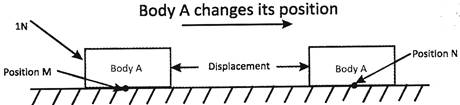
Let the body A is at rest at a point M, and a force of IN is applied on the body.
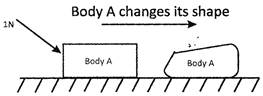
The following three conclusions can be obtained by applying the force on the body A:
(i) If body A changes its position from M to N then the work is done.
Introduction
Work force and energy are interrelated with each other. When a body moves from one place to another on applying a force it is said that the work is done. Work is said to be not done if body does not move or does not change its position on application of force on it. The unit for the measurement of work done is Joule and represented by first letter of its name, "J". The unit for the measurement of force is Newton and represented by the first letter of its name "N". If displacement and work done is known then the applied force can be calculated.
Energy is the capacity to do the work. Heavy work require more energy and all living things obtain energy from the food they eat. In this chapter, we will study about these three important physical quantities work, force and energy.
Work
Work is said to be done if a force is applied on a body and body changes its states or physical shape. If the applied force and displacement are in parallel and in the same direction then the work done is said to be positive. The work done is said to be negative if the displacement is in opposite direction.
Let the body A is at rest at a point M, and a force of IN is applied on the body.
The following three conclusions can be obtained by applying the force on the body A:
(i) If body A changes its position from M to N then the work is done.
 (ii) If body A changes its shape is also work is done.
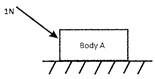
 (iii) If body A, neither changes is position nor its shape then no work is done.
No displacement and no change in shape
(iii) If body A, neither changes is position nor its shape then no work is done.
No displacement and no change in shape
 When an amount of force is applied on a body, the rate of displacement of the body also depends on the mass of the body. Therefore, heavier body requires more force to displace. The work is said to be done even if the body moves from its position or it changes its shape. The mass of the body is not considered for calculating the work done.
When a force of 1 N is applied on a body and body changes its position by 1 metre, the work is said to be done and work done is calculated by the following formula;
Work done = Force x Displacement = 1 N x 1 m = 1 Nm = 1 Joule.
Therefore, the applied force \[=\frac{Work\,done}{Displacement}\]
And displacement \[=\frac{Work\,done}{Applied\,force}\]
Let us assume that the body L is in rest at point P. A force of 250 N is applied on the body to push it. Body L more...
When an amount of force is applied on a body, the rate of displacement of the body also depends on the mass of the body. Therefore, heavier body requires more force to displace. The work is said to be done even if the body moves from its position or it changes its shape. The mass of the body is not considered for calculating the work done.
When a force of 1 N is applied on a body and body changes its position by 1 metre, the work is said to be done and work done is calculated by the following formula;
Work done = Force x Displacement = 1 N x 1 m = 1 Nm = 1 Joule.
Therefore, the applied force \[=\frac{Work\,done}{Displacement}\]
And displacement \[=\frac{Work\,done}{Applied\,force}\]
Let us assume that the body L is in rest at point P. A force of 250 N is applied on the body to push it. Body L more...  Energy
We require energy to do our daily work. Our body can apply force on an object due to the energy of our body. Therefore, the energy is the capacity to do the work. Energy can neither be created nor destroyed, it is only transformed from one form of energy into another form. Our body obtain energy from the food we eat. A form of stored energy is consumed by the living organism to do the work. The unit for the measurement of energy is Joule is represented by the first letter of its name "J ".
Let us understand energy with a given example:
Take a piece of stone and lift the stone up at a certain height. Put a earthen pot on the surface exactly below the lifted stone. The work will be done by you on lifting the stone and an amount of energy is stored in the stone on lifting the stone at a height. Now, drop the stone on the earthen pot. The pot will break into small pieces. And the energy stored in the stone will be transferred on the earthen pot which will break the pot into small pieces.
Energy
We require energy to do our daily work. Our body can apply force on an object due to the energy of our body. Therefore, the energy is the capacity to do the work. Energy can neither be created nor destroyed, it is only transformed from one form of energy into another form. Our body obtain energy from the food we eat. A form of stored energy is consumed by the living organism to do the work. The unit for the measurement of energy is Joule is represented by the first letter of its name "J ".
Let us understand energy with a given example:
Take a piece of stone and lift the stone up at a certain height. Put a earthen pot on the surface exactly below the lifted stone. The work will be done by you on lifting the stone and an amount of energy is stored in the stone on lifting the stone at a height. Now, drop the stone on the earthen pot. The pot will break into small pieces. And the energy stored in the stone will be transferred on the earthen pot which will break the pot into small pieces.
 Forms of Energy
There are many forms of energy and one form of energy is transferred into another form by the motion, chemical reactions, etc. Some forms of energy are as follows:
(i) Mechanical energy
(ii) Light energy
(iii) Chemical energy
(iv) Heat energy
(v) Electrical energy
(vi) Nuclear energy
(vii) Magnetic energy
(viii) Sound energy
Forms of Energy
There are many forms of energy and one form of energy is transferred into another form by the motion, chemical reactions, etc. Some forms of energy are as follows:
(i) Mechanical energy
(ii) Light energy
(iii) Chemical energy
(iv) Heat energy
(v) Electrical energy
(vi) Nuclear energy
(vii) Magnetic energy
(viii) Sound energy
 Mechanical Energy
A raised object possess a form of energy, called potential form of mechanical energy. A running object is capable to do the work because, it has kinetic form of mechanical energy. Therefore, the mechanical energy is the sum of both potential and kinetic energy and a body has mechanical energy if it has either potential or kinetic energy or both. There are two forms of mechanical energy, potential energy and kinetic energy, which are discussed below.
(A) Potential Energy: An object possess potential energy even if the object is in rest. An object can be in its static state if placed at a height. Also an object which has elastic property can remain in its static state until the force is applied. The two forms of potential energy, that is, gravitational potential energy and elastic potential energy are discussed below.
(i) Gravitational Potential Energy: The potential energy of an object depends on the mass, raised height from the surface and gravity. If one of all three parameters is increased then the potential energy of the object is also increased. Therefore, the potential energy of an object is the product of its mass, height at which the body is placed and gravity by which the object is pulled. If an object is placed at a height, the more...
Mechanical Energy
A raised object possess a form of energy, called potential form of mechanical energy. A running object is capable to do the work because, it has kinetic form of mechanical energy. Therefore, the mechanical energy is the sum of both potential and kinetic energy and a body has mechanical energy if it has either potential or kinetic energy or both. There are two forms of mechanical energy, potential energy and kinetic energy, which are discussed below.
(A) Potential Energy: An object possess potential energy even if the object is in rest. An object can be in its static state if placed at a height. Also an object which has elastic property can remain in its static state until the force is applied. The two forms of potential energy, that is, gravitational potential energy and elastic potential energy are discussed below.
(i) Gravitational Potential Energy: The potential energy of an object depends on the mass, raised height from the surface and gravity. If one of all three parameters is increased then the potential energy of the object is also increased. Therefore, the potential energy of an object is the product of its mass, height at which the body is placed and gravity by which the object is pulled. If an object is placed at a height, the more...  Magnet
 is a substance which attracts magnetic materials such as iron, nickel, steel and cobalt. Magnets of different shape and size are made to serve our different purposes. Like U-shaped magnet, cylindrical magnet, bar magnet etc.
Magnetic Materials: The materials which are attracted by a magnet are called magnetic materials. For example iron, nickel, steel and cobalt are magnetic materials.
Note : Magnetic Materials: The materials which are not attracted by a magnet are called non- magnetic materials. For example copper, aluminium, air, water, rubber etc. are non-magnetic materials.
Non-Magnetic Materials: The materials which are not attracted by a magnet are called non-magnetic materials. For example copper, aluminium, air, water, rubber etc. are non-magnetic materials.
Magnet
Magnet is a substance which attracts magnetic materials such as iron, nickel, steel and cobalt. Magnets of different shape and size are made to serve our different purposes. Like U-shaped magnet, cylindrical magnet, bar magnet etc.
Magnetic Materials: The materials which are attracted by a magnet are called magnetic materials. For example iron, nickel, steel and cobalt are magnetic materials.
Note : Magnetic Materials: The materials which are not attracted by a magnet are called non- magnetic materials. For example copper, aluminium, air, water, rubber etc. are non-magnetic materials.
Non-Magnetic Materials: The materials which are not attracted by a magnet are called non-magnetic materials. For example copper, aluminium, air, water, rubber etc. are non-magnetic materials.
 Magnetic Field
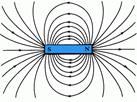
Magnetic field is the region around a magnet in which a magnetic material experience force applied by the magnet. When we bring any magnetic material such as iron, nickel, cobalt near a magnet, it experience a force.
Magnetic Field
Magnetic field is the region around a magnet in which a magnetic material experience force applied by the magnet. When we bring any magnetic material such as iron, nickel, cobalt near a magnet, it experience a force.
 Magnetic Compass:
It is a magnetized needle pivoted freely at a point. It is used to find the direction.
Magnetic Compass:
It is a magnetized needle pivoted freely at a point. It is used to find the direction.
 Poles of a magnet
The regions of a magnet where strongest magnetic fore is experienced by a magnetic material are called poles of the magnet. A magnet has two poles, North Pole and South Pole. A freely suspended magnet always comes to rest in north-south direction. The pole which directs toward the north direction are called north pole and the pole which directs towards the south direction are called south pole.
Force of Attraction and Repulsion between Magnets
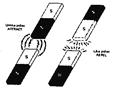
When North Pole of a magnet brought near the north pole of another magnet, force of repulsion is experienced between them. And when North Pole of a magnet is brought near the south pole of another magnet, force of attraction is experienced between them. So we can say like poles repel each other and unlike poles attract each other.
Poles of a magnet
The regions of a magnet where strongest magnetic fore is experienced by a magnetic material are called poles of the magnet. A magnet has two poles, North Pole and South Pole. A freely suspended magnet always comes to rest in north-south direction. The pole which directs toward the north direction are called north pole and the pole which directs towards the south direction are called south pole.
Force of Attraction and Repulsion between Magnets
When North Pole of a magnet brought near the north pole of another magnet, force of repulsion is experienced between them. And when North Pole of a magnet is brought near the south pole of another magnet, force of attraction is experienced between them. So we can say like poles repel each other and unlike poles attract each other.
 Uses of Magnet
It is used in various equipments like refrigerators, video tapes, radio, etc.
It is used to separate magnetic materials from waste.
It is used to make magnetic compass.
Uses of Magnet
It is used in various equipments like refrigerators, video tapes, radio, etc.
It is used to separate magnetic materials from waste.
It is used to make magnetic compass.

 Which one of the following is a magnetic material?
(a) Glass
(b) Plastic
(c) Wood
(d) Cobalt
(e) None of these
Answer: (d)
Which one of the following statements is correct?
Statement 1: The materials which are attracted by a magnet are known more...
Which one of the following is a magnetic material?
(a) Glass
(b) Plastic
(c) Wood
(d) Cobalt
(e) None of these
Answer: (d)
Which one of the following statements is correct?
Statement 1: The materials which are attracted by a magnet are known more...  Introduction
Light is one of the important natural resources. Without light no life is possible on the earth. Sun is the source of light on Earth. We able to see the things because of the reflection of light. The object which produces light is called luminous object. And the objects, that do not produce light are, non-luminous object. Moon in the sky does not have its own light. It shines by the reflection of Sun light.
Light does not require any medium to travel. It can travel in the vacuum also. Depending upon the passing of light through the objects, they are divided into three groups;
(i) Transparent object: It allows light to pass through it, e.g. glass, water, etc.
(ii) Translucent object: It allows only certain amount of light to pass through it, and absorbs rest of light. For example, butter paper, etc.
(iii) Opaque: It does not allow light rays to pass through it, at all. For example, stone, wood, book etc.
Sound also plays an important role in our life. We are able to communicate with each other because of the sound energy. Sound waves require medium to travel. The atmosphere or air around the Earth provides the medium for the travel of sound waves. In this chapter, we will study about the properties of light and sound.
Introduction
Light is one of the important natural resources. Without light no life is possible on the earth. Sun is the source of light on Earth. We able to see the things because of the reflection of light. The object which produces light is called luminous object. And the objects, that do not produce light are, non-luminous object. Moon in the sky does not have its own light. It shines by the reflection of Sun light.
Light does not require any medium to travel. It can travel in the vacuum also. Depending upon the passing of light through the objects, they are divided into three groups;
(i) Transparent object: It allows light to pass through it, e.g. glass, water, etc.
(ii) Translucent object: It allows only certain amount of light to pass through it, and absorbs rest of light. For example, butter paper, etc.
(iii) Opaque: It does not allow light rays to pass through it, at all. For example, stone, wood, book etc.
Sound also plays an important role in our life. We are able to communicate with each other because of the sound energy. Sound waves require medium to travel. The atmosphere or air around the Earth provides the medium for the travel of sound waves. In this chapter, we will study about the properties of light and sound. 
You need to login to perform this action.
You will be redirected in
3 sec